This article was originally published in Italian on MyReviews.it in 2016.
Can a 2005 title still look appealing to a modern audience, just as it is? Nihon Falcom and XSeed have the answer with Xanadu Next, a game that manages to win one of the boldest bets imaginable. Though at first glance it might seem like just another of Falcom’s many—usually solid—Japanese action RPGs inspired by the Ys formula, this one has a much older heritage. Its roots go all the way back to the Dragon Slayer series, a name almost unknown in the West. The connection between the two is rather loose, limited mostly to the legendary civilization of Xanadu, which once again takes center stage. As the classic silent hero, you’ll soon discover that the pursuit of truth always hides more than a few surprises—and dangers—along the way.
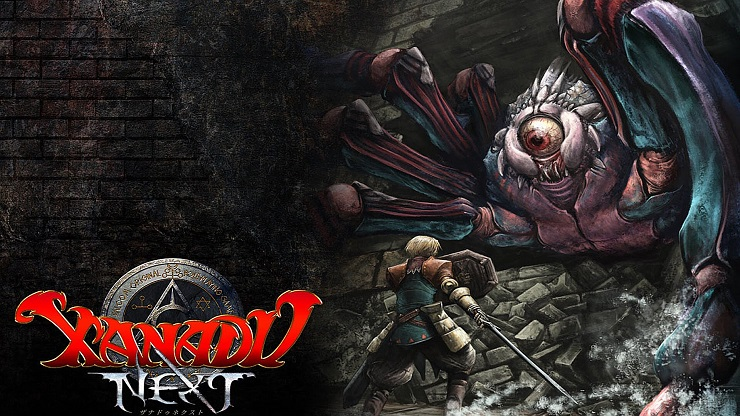
In one of the briefest introductions I’ve ever seen, Xanadu Next wastes no time on lengthy setups or complex motivations. On one side, we have a young researcher fascinated by the origins of a mysterious castle said to appear sporadically on the surface of Lake Orwell. On the other, a stoic warrior from a fallen order of knights, eager to test his blade against whatever monstrosities cross his path. What surprises most, however, is the sheer flatness of the visual presentation: character models are so rough and angular that they immediately recall several bygone console generations. Once the initial shock wears off—this looks more like a mid-’90s Nintendo 64 production than a 2005 PC release—you’ll find Xanadu Next unfolding into a simple yet captivating hack-and-slash adventure.
Structured as a room-based world reminiscent of classic metroidvania design, only the peace of the village—its inns and shops—offers respite from the constant battles. Combat is straightforward but satisfying, entirely manageable with just a mouse. Clicking on an enemy triggers an attack, but your position relative to their facing determines the blow’s effectiveness. That’s no accident: Xanadu Next was designed for PC, and while controller support exists (and works reasonably well), the pacing and rhythm clearly favor mouse and keyboard. Anyone expecting a Steam-style Ys experience will have to adjust.
Yet fans of Falcom’s productions shouldn’t be discouraged. The apparent simplicity hides a surprisingly deep layer of mechanics that must be mastered to triumph, especially when facing the formidable dungeon bosses. There’s plenty to explore: passive abilities, weapon-based skills that must be learned through use (somewhat like in Final Fantasy IX), and the ability to bind your hero to guardian spirits represented by mystical cards found throughout the dungeons. Each guardian grants different bonuses and specialties, adding real tactical depth.
Despite its age, Xanadu Next feels remarkably agile and modern. Genre conventions like backtracking are part of the experience—and forgivable in a dungeon crawler, aren’t they? Progress feels tangible and rewarding, especially as you discover shortcuts and items that make navigation through the sprawling labyrinth smoother. True to its metroidvania roots, the game frequently asks you to retrace your steps to access previously unreachable areas, reinforcing that satisfying sense of progression. Character growth also plays a major role: experience points raise levels, while stat allocation at the village temple allows for full customization, helping you meet the requirements for new weapons and armor.
Younger players might even be reminded of the mysterious “level-up maidens” from FromSoftware’s Souls series. Personally, Xanadu Next brought to mind several 3D adventure classics. Its expanding world recalls The Legend of Zelda, while its sparse dialogue, fragmented cinematics, and lore hidden in scattered texts evoke Vagrant Story—Squaresoft’s PlayStation masterpiece that shares both its storytelling techniques and its haunting underground atmosphere. These are flattering comparisons, and yet Xanadu Next manages to stand on its own. Its art direction—somewhere between ’80s manga illustrations and semi-realistic CGI—gives it a distinctive personality that deserves recognition despite its technical shortcomings. Even in 2016.
Xanadu Next may not be the most visually appealing action RPG, but beneath its rough presentation lies a refined, classically styled adventure. It offers a rewarding blend of layered mechanics and clever design choices that consistently serve the player’s enjoyment—even when its repetitive moments might test the patience of less determined adventurers.