This article was originally published in Italian on MyReviews.it in 2017.
On the other side of the world, in small rooms plastered with posters and slightly risqué illustrations, live the otaku — people who’ve taken their passion for a medium to the point of obsession. In the West, we tend to use the term “otaku” to refer exclusively to fans of Japanese comics and animation, but in Japan the word can describe any kind of enthusiast or “maniac” devoted to a particular field, from embroidery to hunting, from TV dramas to cooking.
Fate/EXTELLA is a product openly designed to cater to the tastes and expectations of anime fans — the very otaku mentioned above — and in particular those who follow the franchise from which the game takes its name. Fate/Stay Night was just the beginning: a visual novel that mixed fantasy concepts with adult content, which over the years completely abandoned its erotic roots to embrace narratives with a more typical shonen flavor. The result was a flood of spin-offs of every kind, from comedy to shojo, including literary adaptations and more.
Developed by Marvelous, Fate/EXTELLA follows the same philosophy, offering an alternate continuity to the main series while connecting itself to the events and universe of Fate/EXTRA, an RPG originally released for the Sony PlayStation Portable. The game featured battles between sorcerers known as Masters and their historical or mythical companions, the Servants. It’s a relationship of dominance and submission that faintly recalls the “Master & Slave” dynamics one might associate with the bedroom, though here it’s explored through brutal duels between improbable teenagers fighting for possession of the Holy Grail.
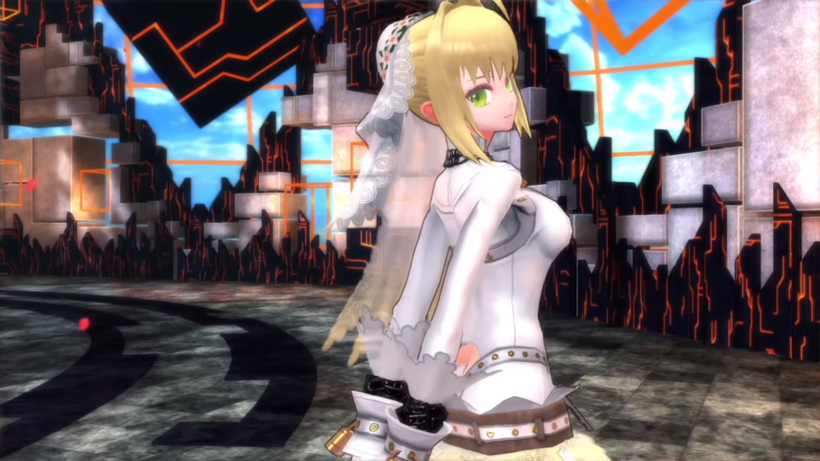
In short, Fate/EXTELLA doesn’t stray far from the formula, centering its narrative around fierce battles between Masters and their legendary heroes — in this case the graceful Nero Claudius (a gender-swapped version of Emperor Nero), the serene Altera (also known as Attila), and many others, including fan-favorites from previous entries like the beloved Artoria Pendragon, a female take on King Arthur. Between lighthearted scenes where “waifus” reign supreme and long, text-heavy sequences straight out of a visual novel, the story unfolds through three main narrative routes, each focused on one of the heroines and their bond with the protagonist, plus a fourth, conclusive scenario that wraps up the story mode.
But that’s not all. The tales of Tamamo no Mae, Nero, and Altera may be the highlight, yet players can also dive into shorter side stories dedicated to other Servants appearing in supporting roles throughout the main campaign, even unlocking a few secret ones along the way. In short, fans of the series will find plenty to enjoy — if only the gameplay itself weren’t such a watered-down and somewhat disappointing take on the already overused musou hack’n’slash formula. Think Dynasty Warriors, only not developed by Omega Force or Koei Tecmo.
Against hordes of indistinguishable enemies just waiting to be slaughtered so we can fill up the usual “super move gauge,” Fate/EXTELLA isn’t about performance on the battlefield as much as it is about reading the map and zipping from one control zone to another across the game’s bland arenas, each vaguely inspired by some historical or geographical setting. Every segment of the map contains a set number of digital keys, and each stage requires the player to beat the opponent to their collection in order to open a portal and face the obligatory stage boss.
It all flows smoothly enough, and the game does offer several attack types to vary the combat a little, but the lack of meaningful variety in level design — combined with the near-identical feel of the four main storylines and the optional side routes — makes the experience extremely repetitive. Even the light RPG and strategy elements sprinkled between stages, such as crafting upgrades or boosting your Servant’s stats based on your “affinity level,” fail to inject much depth into the gameplay loop. Ultimately, the experience caters almost exclusively to diehard fans of the Fate franchise.
The generous dose of fanservice carefully packed into the disc (or cartridge) — with plenty of familiar faces to please both old and new fans of the Fate and Type-Moon universe — isn’t matched by a comparable level of technical polish. From the very first minutes, it’s clear the game’s origins lie in the hardware limitations of Sony’s handheld. Playing Fate/EXTELLA on PlayStation 4 feels like booting up a remaster of a portable title: everything runs clean and fast (a rock-solid 60fps), but the visuals remain simplistic, with low-detail environments and barebones geometry. Thankfully, the gorgeous illustrations and opening sequence by renowned animation studio SHAFT (Puella Magi Madoka Magica, Bakemonogatari) help elevate the presentation somewhat, though more expressive character models and flashier special attacks would have gone a long way — especially in an era where studios like CyberConnect2 set the standard for anime-style visuals.
Fate/Extella: The Umbral Star is an hack’n’slash that borrows Koei Tecmo’s musou formula and tries, in its own modest way, to rework it — without showing much creative flair. Its extreme repetitiveness and low production values firmly place it among those games made solely for the fans, who are likely more interested in seeing their favorite character on screen than in the actual quality of the gameplay experience.