This article was originally published in Italian on GeekGamer.it in 2018.
Going back to Yokosuka and stepping off the boat in Hong Kong for the second time, I have to admit I wasn’t expecting to feel anything remotely fresh… not in a videogame that’s almost twenty years old. Bringing a legendary name like Shenmue back to life and back into the spotlight isn’t something just anyone can pull off, and both SEGA and D3T know it well.
It’s clear that both Shenmue and Shenmue II are far from what we’d call a modern videogame, but the direction the developer took with this remaster was probably the wisest one. They chose to recreate what we saw on SEGA Dreamcast and Xbox as faithfully as possible. Maybe that’s why, in both cases, I willingly endured the downtime that defines these two titles, so focused on rebuilding a believable historical setting that even the most hesitant player eventually sinks into their atmosphere.
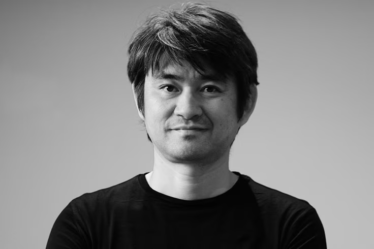
Shenmue has never been a series “for everyone”, as our local critics love to point out whenever they wrap up reviews of games with that distinctly Japanese flair. And maybe that’s also why Yu Suzuki’s saga, created by the same mind behind Virtua Fighter and so many other classics from SEGA’s golden age, was forced to stop at the end of the second chapter. That ending was such a cruel cliffhanger that it sparked an avalanche of theories about Ryo Hazuki’s future and the continuation of his story.
Despite sales that were relatively modest compared to the massive budget SEGA poured into producing the first two episodes, it’s obvious that over time and through word of mouth the legend of those revolutionary Dreamcast titles spread across online communities around the world. Only the second game would eventually be re-released on Xbox, yet the myth grew enough to push Suzuki himself to gather a small independent team and launch a Kickstarter campaign to bring back that 1980s Japan he seems so deeply attached to. The success of that campaign is evident in the sheer amount of money thrown at him and a group of virtual unknowns held together by tape and determination.
It’s no surprise, then, that Shenmue I & II is making noise again with this re-release on PS4, Xbox One and PC. It caught the attention not only of nostalgic fans but also of those who had heard for years about the excellence of a gameplay style somewhere between investigative adventure and JRPG. Even though its every polygon bears the marks of time, that gameplay still manages to stand out and impress.
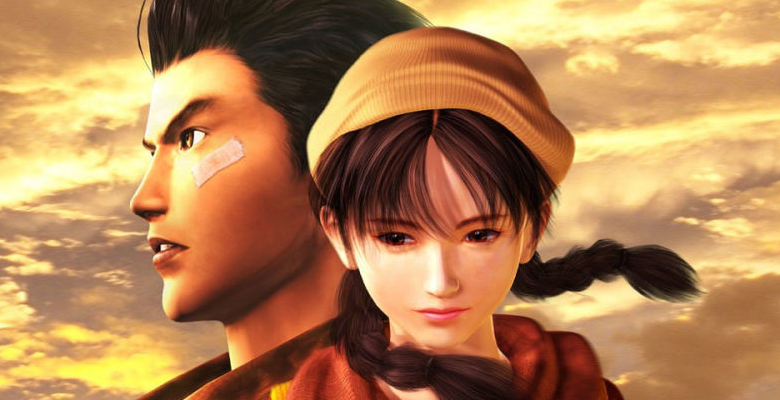
Shenmue I serves as a tasty appetizer to the full experience, telling the beginning of Ryo Hazuki’s journey to Hong Kong in search of the fearsome martial arts master Lan Di. After killing Ryo’s father and stealing a family treasure, Lan Di sets in motion the protagonist’s transformation from an ordinary Japanese student into a young man thrown into adulthood through brawls and not-always-safe adventures. The first chapter plunges us into a bucolic Japanese setting crafted with meticulous detail, where most characters have a unique background and a daily routine that shifts with the time of day and the changing weather. Shenmue’s brilliance lies in the small things, where the narrative thread never really breaks free from the gentle pace of a daily life filled with constant waiting and occasional surprises. Ryo’s journey begins in the neighborhood where he grew up, surrounded by friendly faces, only to push him toward an adult world that is indifferent and often hostile, offering dull jobs and harsh conflicts. Stripped of modern conveniences, the player has to talk to locals to piece together each mystery, solving problems without map icons or giant indicators pointing the way forward. You investigate, fight, jot notes in your notebook, save a lost kitten, go back to investigating, then buy a soft drink for a delivery guy from a Chinese restaurant. Shenmue is shaped by the everyday routine of a largely ordinary person, and even though it leans into more action-oriented moments toward the end, it remains an introductory chapter and a solid training ground for what comes next: a far richer, more action-packed installment.
The second stop in Ryo’s quest for revenge is, in all respects, the better game. The scope of the adventure is so expanded that it makes the first entry feel like a modest demonstration of what Shenmue was truly capable of. And if the whole series can be described as a bold experiment blending exploration, investigative adventure and action scenes, Shenmue II fully matures the ideas that were only hinted at in the first game. It surrounds the protagonist with a credible historical atmosphere, often tense, and so overflowing with optional events, collectibles and minigames that it immediately raises questions about SEGA’s baffling decision to close up shop after completing such a meaningful and intense product.
The remaster is based on the Dreamcast version of Shenmue, the only one SEGA ever published, and on the Xbox re-release of Shenmue II. Both games now run at a higher resolution on consoles and support full 4K on PC, though they remain capped at that famous (and for some, frustrating) 30 FPS. The in-game assets remain untouched, likely to preserve the feel of the originals, but the UI has been redrawn in high resolution and optional graphical settings are included to reduce aliasing. The control scheme comes in two variants, one more modern and one replicating the Dreamcast design. Even so, movement is still bogged down by the stiff, tank-style controls typical of the late ’90s, and while things feel smoother with two analog sticks, the game remains tied to the era’s limitations. The package also supports aspect ratios beyond the original 4:3, though this means some cutscenes appear with side borders. The entire audio section, blessedly including the superior Japanese dub, suffers from heavy compression, and much of the original soundtrack is reproduced differently from how it sounded on the original hardware. As for quality of life, you can now save at any time without intruding on the original team’s occasionally unfriendly design choices. And as expected, this collection does not include the Shenmue Passport features or the What’s Shenmue extra scenario, both of which could have been a welcome novelty for Western fans and an excuse to add in-game leaderboards.
Despite Digital Foundry’s enthusiastic praise, both games suffer from several issues and inconsistencies compared to the originals, and it’s worth pausing here to address them.
As of this writing, the only version updated to the latest patch is the PC release, while the Xbox One and PS4 versions have yet to be officially adjusted. Despite the developer’s post-launch efforts, both chapters in this collection have graphical and audio problems significant enough to push the entire fanbase to create mods in an attempt to restore what can be restored.
There’s nothing here that deserves to be discarded. SEGA’s operation can ultimately be considered a success, especially as an act of historical preservation. Without it, anyone curious would have been forced to hunt down two old consoles just to experience a classic with an unfortunate legacy. Neither Shenmue nor Shenmue II contains bugs that break progression, nor do they feature artistic changes significant enough to make the originals strictly preferable. Still, this is a deeply imperfect project, hampered by issues that will likely only be fully fixed in the PC version, where the joint effort of developers and fans can properly honor a saga that will breathe again under Yu Suzuki’s perfectionist gaze only with the release of the long-awaited third chapter. Or at least, that’s the hope.
The Shenmue I & II package faithfully brings back SEGA’s first two episodes in a respectful way, but it remains an imperfect effort that, in many respects, is best approached on PC, where fans can restore all the elements the developers weren’t able to recover.