This article was originally published in Italian on TheGamesMachine.it.
The case of Romancing SaGa: Minstrel Song is a unique one. Upon its original PlayStation 2 release in 2005, the game presented itself as a 3D remake of the Super Nintendo classic, inheriting all the idiosyncrasies of the sister series born from Final Fantasy II‘s peculiar gameplay DNA. While it never garnered significant Western interest, the game was re-released in high definition in 2022 for modern platforms, introducing welcome changes that softened the sharpest edges of its distinctive systems.
The version before us now is a further remastered edition subtitled “International,” the result of a collaboration between Square Enix and the indie publisher Red Art Games. The goal? To reach a global audience with newly translated text in major European languages.
We wish we could report that Romancing SaGa: Minstrel Song Remastered International represents a comprehensive, virtuous example—packing all the modern enhancements one expects from a contemporary SaGa title (see last year’s excellent Romancing SaGa 2 remake). In truth, however, this rerelease is noteworthy almost exclusively for its new language localization.
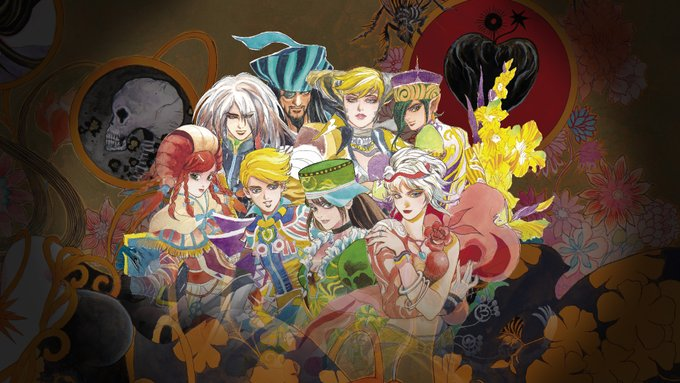
Is that a problem? Not exactly, given the groundwork already laid. Romancing SaGa: Minstrel Song is an unconventional RPG that encapsulates the core ideas of its creator, Akitoshi Kawazu. Players begin by choosing one of eight protagonists, experience a prologue introducing their unique traits, and are then set free to explore the vast world of Mardias guided solely by curiosity.
In essence, Square Enix’s title is Japan’s closest attempt to capture, in spirit, the experience of a tabletop RPG. Although a main narrative exists—revolving around ancient deities awakening to end mortal peace—Romancing SaGa: Minstrel Song offers a completely open structure. Here, the mere number of battles fought advances the hands of an invisible clock (now displayed as the “Event Rank” in the main menu), which dictates the story’s progression.
Recruiting indispensable companions at taverns or venturing into dangerous dungeons for loot becomes routine. Yet the bonds formed with Mardias’ inhabitants and the choice of which quests to pursue rest entirely with the player. A warning is warranted: while each playthrough can potentially yield new experiences and narrative branches, players accustomed to linear JRPG conventions may feel utterly alienated by the sheer freedom on offer.
In many ways, Romancing SaGa: Minstrel Song Remastered International asks players to relearn JRPG fundamentals from the ground up, wiping away genre conventions in a single stroke.
Exploration may present situations requiring unique character skills—herbalism to pick a healing flower, or sufficient Perception to spot a hidden chest. Broadly, most events are triggered by conversations with townsfolk; in SaGa, nothing is left to chance.
One might, for instance, hear of a storage facility overrun by trolls. Arrive in time, and you can deal with them. Arrive too late, and the place may be empty—or the situation may have been resolved off-screen by other adventurers or guards.
Combat is turn-based and triggered by contacting enemies on the field, yet it operates on logic that often feels dice-driven (the proverbial D20 roll). New techniques are learned primarily by challenging far stronger foes, with the added risk that weapons and combat arts can break or be permanently exhausted during fights. Companions are vital, as offensive skills can be combined, with results varying drastically depending on who you recruited.
Character progression also echoes Western tabletop RPGs like Dungeons & Dragons, featuring specific elemental magic schools and a class system that rewards meticulous players. Want to master a particular weapon? You can—but manage money and skill points wisely, or the experience may become a race against time.
As noted, the number of battles dictates the pace of story progression and rising difficulty—a tempo manageable by choosing between a slower curve or the original PS2 rhythm. We strongly advise against trying to complete everything Mardias offers in a first playthrough; its layered mechanics form a steep learning curve.
Experimenting with menus and revisiting the handy tutorials is a necessity rare in modern gaming. Once you reach the understanding needed to navigate its systems with ease, however, the experience becomes deeply rewarding, chiefly for its unique fusion of Western RPG philosophy and Japanese design sensibilities.
The flip side is a constant feeling of being lost and alone in a hostile world, with a narrative in no hurry to unfold. We encourage approaching this title as if from a parallel RPG lineage: what if the genre had evolved not from Wizardry, Final Fantasy, and Dragon Quest, but from an alien hybrid of Baldur’s Gate, The Elder Scrolls, and Ultima? This is Romancing SaGa: Minstrel Song Remastered International—an RPG you could replay endlessly without ever encountering certain major characters or entire story arcs.
This second remaster includes all previous improvements. On PlayStation 5, resolution reaches pristine 4K, with original FMVs framed to avoid distortion. The super-deformed 3D character models somewhat clash with the elegance of veteran designer Tomomi Kobayashi’s illustrations, but the visual clarity is welcome. The game remains unmistakably twenty years old, with no attempt to modernize its graphics beyond basic polish.
Fortunately, modernization efforts focused on expanding and refining the intricate gameplay, adding recruitable characters, new events, and bosses. Alongside essential quality-of-life options like faster movement and combat, the interface has been heavily reworked with multiple customizable layouts. As noted, the “International” edition includes a strong Italian translation and, crucially, finally adds the original Japanese voice track—a surprising omission from the prior remaster.
Romancing SaGa: Minstrel Song Remastered International is not an evolutionary leap after twenty years, nor a technical restoration that sharpens the work to match its ambitious ideas. It is a thoughtful tribute to a peculiar and unrepeatable approach to the Japanese RPG.
The Italian localization—the core addition here—finally opens the door to a remarkably freeform and unpredictable system, one that rewards curiosity and punishes linear thinking with the same natural harshness with which quests can vanish unannounced. Quality-of-life additions, new party members, and interface refinements soften its historical rough edges without diluting its core logic. Romancing SaGa remains a living, mutable ecosystem: disorienting at times, yet always ready to surprise those willing to be guided by the unexpected.
Not a remaster for everyone, but a gateway to a universe that rejects compromise, existing for those who seek in JRPGs something radically different from the norm.