This article was originally published in Italian on Nerdgate.it in 2020.
To celebrate a major push to revive the Captain Tsubasa brand (formerly known in Italy as “Che campioni Holly e Benji”), alongside a brand-new animated series produced by Japanese animation studio David Production (JoJo’s Bizarre Adventure, Hyperdimension Neptunia), comes the highly anticipated new video game from Bandai Namco. Anyone who follows Captain Tsubasa gaming adaptations already knows that these products historically struggled to reach Western shores—whether due to a lack of genuine US audience interest (where the franchise was virtually absent from television schedules) or the media pull fatigue of a series that dominated the ’80s and early ’90s without ever truly exploding outside of select European and Latin American countries.
With this new Captain Tsubasa: Rise of New Champions, the animated series can finally shake off the lingering “niche odor” that previously plagued its game adaptations, landing all at once worldwide on Nintendo Switch, PlayStation 4, and PC.
It is precisely this PC version that I am covering today with an underlying sense of bitterness. The game itself is a genuine feast for the eyes if you’ve ever had even a passing affection for the characters that make Captain Tsubasa a timeless story. Entrusting development to Tamsoft (Senran Kagura), however, might not have been the best call despite the clearly polished visual presentation cleverly wrapped up for fan consumption. A striking draw that comes at the expense of a gameplay loop that feels… perhaps a bit too clumsy.
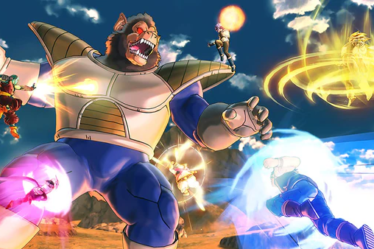
Stepping away from the JRPG influences of Level-5’s Inazuma Eleven, Captain Tsubasa: Rise of New Champions presents itself as a true arcade football game, the likes of which we haven’t seen on our screens in a long time. Offering two single-player campaigns, a dedicated online mode, and a character editor reminiscent of recent Bandai Namco anime adaptations (the most successful of which remains Dragon Ball Xenoverse 2, despite everything), the game doesn’t hesitate to throw players right into the middle of the Captain Tsubasa storyline. It immediately makes clear that it speaks exclusively to those already familiar with Yoichi Takahashi’s manga or anime series. Without much setup—aside from exposition heavy visual novel-style segments—the game explains itself through brief tutorials scattered across the single-player campaign.
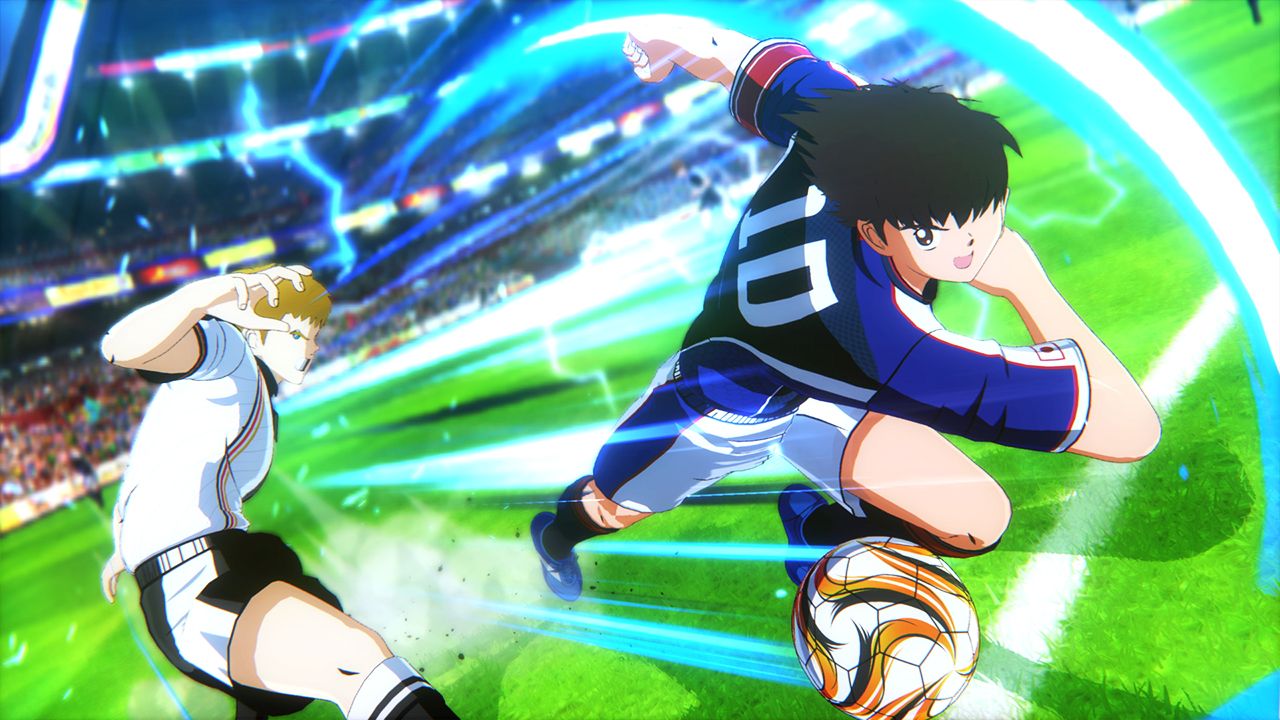
Every player on the pitch has a stamina bar (called “Spirit”) used to sprint and execute actions, while key characters on each team can unleash special moves across almost every position on the field—complete with super moves featuring superbly crafted real-time sequences. While the first campaign, “Episode: Tsubasa,” doesn’t allow you to alter on-field events much as it strictly rails along the story of the manga and anime, the “Episode: New Hero” campaign is the real meat of this new entry dedicated to Nankatsu’s star striker. It serves as a genuine “what-if” scenario where a custom footballer, created by the player, can forge their own path across different narrative lines while interacting with the saga’s most famous faces.
It’s a genuine chance to reconnect with childhood heroes old and new, forging friendships built on loyalty and the drive to improve at the sport that makes their hearts beat fastest: football. So far, so good—setting aside a few odd design choices meant to artificially inflate the experience’s runtime.
Everything would run smoothly if… you didn’t actually have to step onto the pitch. Once match play begins, the title frequently proves unfair and fairly broken when it comes to player AI. In addition to the aforementioned Spirit meter, each team has another gauge filled by maintaining ball possession, executing dribbles, and so forth. Match after match, it becomes glaringly obvious that beyond arcade-style football mechanics (there are no fouls in this game, for instance), what really needs to be managed and conserved is your pool of special techniques to unleash against opponents, regardless of your actual skill with a controller. In this regard, even the hidden RPG framework—evident from the stats and unique traits of key iconic players—fails to make the experience accessible to those who don’t want to meticulously study every squad’s available techniques. Even keeping track of the action on the pitch causes headaches, so much so that the game offers multiple camera angles; my personal advice is to rely heavily on the overhead minimap at the bottom of the screen.
The online suite lets you jump into creating a custom team with plenty of visual customization options, leveraging a wide selection of famous character rosters unlocked by playing through the single-player campaign. Yet on this front as well, unpleasant surprises were bound to show up: while your avatars can learn signature moves and skills from main characters, progression relies on an onerous loot box system (collectible cards unlocked purely via in-game currency, fortunately) to take shape, offering little leeway to players who simply want to build what they want without sinking endless hours into tedious point farming. On top of that, the single-player mode features several unlockable cutscenes—offering significant rewards, especially for die-hard fans—that require players to recreate exact scenarios from the animated series during matches.
Stated like that, it might sound appealing to some, but having to intentionally concede goals under specific conditions just to trigger a brief cutscene isn’t exactly what players seeking a lighthearted football experience are looking for. To be sure, Tamsoft offers plenty of content this way, but the sheer simplicity of a football engine governed almost entirely by obnoxious on-screen meters can quickly grow tedious—especially if you aren’t prepared to stomach a needlessly cumbersome control scheme, particularly when timing dribbles and defensive actions.
That being said, as noted at the outset, Captain Tsubasa: Rise of New Champions is easily the most visually spectacular game based on the franchise I have ever seen on console—or PC, for that matter—complete with unlockable bonus content detailing backstory through clips from the recent anime adaptation. It hurts to admit that the game itself could easily have been much better than it is. If these issues could somehow be addressed and balanced via future patches (especially on the PC version, which I tested alongside the console builds, plagued by several technical hiccups on top of the design flaws described), I might be willing to let it slide. Making compromises with unpolished gameplay is practically second nature for Japanese animation fans dealing with Bandai Namco (or Bandai in years past) titles, but here the core issue lies elsewhere: the game was launched worldwide at full price despite being blatantly unfinished, poorly balanced, and inadequately optimized. This might be understandable for yet another open-world AAA production or a trendy GaaS title, but this is a straightforward tie-in for an anime popular only in specific regions of the world.
And when, for the nth time, you watch AI-controlled players react erratically to a simple pass, you’ll remember why Tecmo’s ’90s Captain Tsubasa adaptations on the Nintendo Famicom were so much more enjoyable to play. At least the online mode functions as intended, though whether its currently active community will withstand the test of time remains to be seen.
Captain Tsubasa: Rise of New Champions is easy to recommend to anyone holding Tsubasa’s journey to football glory close to their heart, but it proves to be an extremely convoluted and perhaps slightly disingenuous product. On one hand, it purports to offer lighthearted, spectacular fun with an engine that rejects both the RPG-heavy style of Inazuma Eleven and the exhausting realism of franchises like PES or FIFA. On the other hand, it hides obtuse strategic and progression mechanics that can easily exhaust anyone outside the die-hard anime fanbase… or this specific subgenre of game. Ultimately, it falls on the wider audience to determine the longevity of an experience whose true test lies in multiplayer: will Bandai Namco be ready to supply continuous material through future DLCs?