This article was originally published in Italian on TheGamesMachine.it
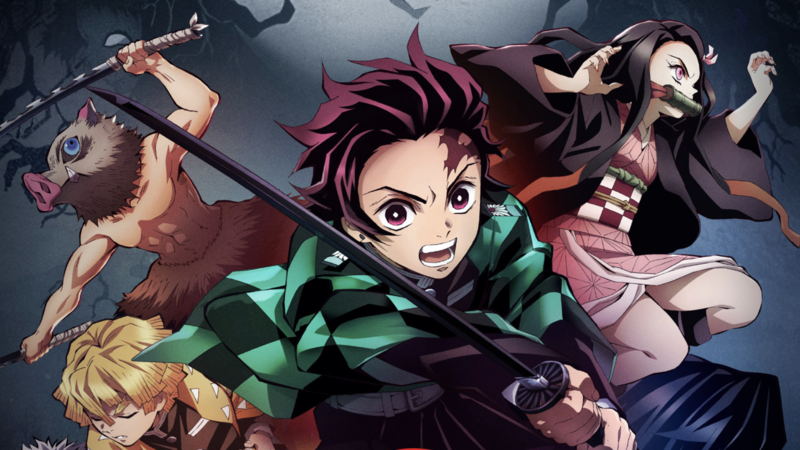
With countless anime-based arena fighters already under its belt, CyberConnect2 reaffirms itself as a true authority in the realm of video games adapted from Japanese boys’ comics. The opportunity to develop a follow-up dedicated to the Demon Slayer phenomenon was simply too good to pass up, especially in light of the massive success that Ufotable and Aniplex’s anime adaptation has enjoyed in recent years. It’s no surprise, then, that on the eve of the final season’s release, Demon Slayer – Kimetsu no Yaiba – The Hinokami Chronicles 2 has appeared on digital storefronts: a 3D cel-shaded brawler that translates the adventures of Tanjiro and his companions into pure, stylized action. And yet, more than a true sequel, at times it feels like an “in-between” chapter.
The differences compared to the first game, released in 2021, are few, with the developers’ main efforts having gone into translating Demon Slayer’s world into three dimensions. In this regard, the story mode picking up right after the events of the Mugen Train arc—revisits the plotlines familiar to fans across the three story arcs adapted in the anime’s streaming seasons on Crunchyroll. Once again, young Tanjiro, his sister Nezuko, and their friends find themselves caught up in fierce battles against demons hungry for human flesh. Naturally, it’s up to the player to guide him deftly through the streets of Yoshiwara’s entertainment district and across the rooftops of a city under siege by monstrous creatures.
From what we’ve seen, CyberConnect2 remains committed to covering, albeit in condensed form, all the essential events of each arc. It’s not just about the battles, which are enriched with interactive animated cutscenes, quick-time events, and 1:1 recreations of anime frames—hallmarks long familiar to fans of the developer’s Naruto Ultimate Ninja Storm series—but also about collectible items that unlock extra lore and background on the characters, along with side quests (few in number and rather simple). There are even a few encounters against enemy hordes, but in this case the gameplay has little new to offer—better to unleash your strongest techniques and wipe them out in one go.
The campaign lasts around 5–6 hours and does an extremely effective job of covering all the key story beats from seasons 2, 3, and 4 of the TV show, ending on a cliffhanger that invites players—and anime viewers alike—to await the conclusion of the tale, soon to be told through a trilogy of films adapting the Infinity Castle arc. Or, more simply, through the already-announced DLC that will expand the experience.
That said, while exploration sections remain the weakest part of the experience largely, due to their lack of bite, they’re still a pleasure to play through thanks to the superb graphics and audio. CyberConnect2 has faithfully and meticulously reproduced not only the excellence of Ufotable’s anime work, but also managed to adapt it seamlessly into the language of modern video games. Non-interactive cutscenes and pure gameplay flow together without jarring transitions, while particle effects and lighting—faithful to the anime’s aesthetic—serve as clear cues for landing hits, spotting collectibles, or anticipating an enemy strike.
If the main story mode’s formula remains unchanged from its predecessor, the same cannot be said for the combat system, which has been expanded with a series of equippable “Gears” that grant passive bonuses during battles. These upgrades can be selected based on their usefulness, significantly affecting match outcomes. In a way reminiscent of the capsules in the now-vintage Dragon Ball Z: Budokai, you can gain energy recovery abilities or enhance specific moves mid-battle. As a result, the same team composition can perform very differently on the battlefield, leaving it up to the player’s skill to balance or exploit these enhancements during sword-to-sword clashes. Given the tag-team nature of the game, it’s also possible to unleash flashy co-op attacks if your chosen swordsman has a strong connection with their battle partner—but this mostly amounts to fanservice rather than adding meaningful gameplay depth.
Beyond these elements, the title is essentially identical to its predecessor, and so the same criticisms we made in our original review still stand. The good news is that the roster now boasts over 40 playable fighters, a significant improvement over the previous entry, though, again, many are returning characters from the first game or its DLC.
The online mode didn’t quite win us over either: there are no lobbies, nor is there access to the training modes found in the original game. The multiplayer offers seasonal play and an internal ranking system but runs on a netcode of inconsistent quality. While the game includes written tutorials explaining in detail the deeper mechanics – such as the defensive system – we would have preferred a mission-based training mode akin to the one in its predecessor. After all, the competitive anime fighter scene is more vibrant than ever, and a lack of ambition here could shorten the game’s lifespan before those future DLCs even arrive. Scalability options were also minimal in our PC test: beyond obvious keyboard and mouse support, we could only adjust resolution and effects settings, with no standout features to speak of. That said, this is a title also available on Nintendo Switch, so its hardware requirements should pose no barrier for most players.
More than a sequel, Demon Slayer – Kimetsu no Yaiba – The Hinokami Chronicles 2 feels like a lavish expansion of the solid story mode already present in the first game. While the gameplay additions are few, they’re still notable, but the feeling that there’s little else to do once the story mode ends suggests that CyberConnect2 could have added a bit more to its latest work. An online mode that feels “old school” by decades-old standards certainly doesn’t do any favors for an arena fighter released today.