This article was originally published in Italian on MyReviews.it in 2016.
After bringing Sword Art Online Re: Hollow Fragment’s definitive edition to Europe on PlayStation 4 and PlayStation Vita, Bandai Namco is once again reviving one of its past franchises in its finest form: welcome God Eater 2: Rage Burst. The name might not ring a bell for some, but this hunting game series has long been beloved in Japan, enough to justify multiple re-releases of its two main entries, an anime adaptation, and probably more. Rage Burst is essentially the subtitle given by the house behind Tekken and Tales of to the “director’s cut” version of God Eater 2, which finally reaches Western audiences years after its original PSP debut in Japan.
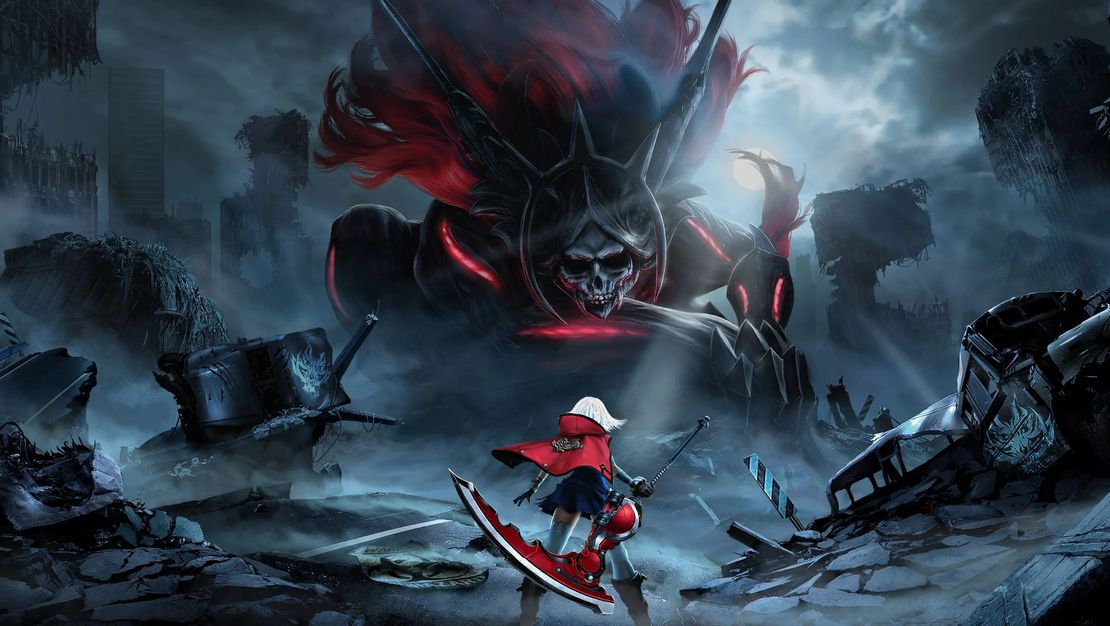
Packaged together and sold at the price of a single title, God Eater 2: Rage Burst includes both main chapters of the franchise in their ultimate forms, complete with all DLCs and bonus content previously available only to Japanese players. It’s an opportunity not to be missed for anyone intrigued by the series’ distinctly J-pop-inspired art direction and the post-apocalyptic atmosphere that permeates its ruined urban battlefields, where players face off against monstrous adversaries.
The story follows a player-created protagonist—customized through a simple yet functional editor—joining a new squad of God Eaters in their attempt to end the war against the Aragami, the terrifying creatures introduced in the first game, known in the West as Gods Eater. The narrative once again leans heavily on themes of camaraderie, friendship, and intrigue within military hierarchies, always one step ahead when it comes to manipulating information. The cast is generally convincing, even if burdened by the familiar anime archetypes typical of Japanese productions. Unfortunately, the same can’t be said for the story itself, which takes a backseat to the attention devoted to its main characters and the relationships that bind them. Just like its predecessor, this sequel invites players to set down the controller between missions and watch numerous cutscenes unfold, often feeling more like spectators than active participants in the fate of its stylish heroes.
Gameplay, however, is a different story. While mechanically similar to the first game (which is included here, enhanced with Rage Burst’s features and now little more than a playable expansion), it introduces several new elements and a much faster pace. The result is a more exhilarating experience, particularly in the later stages, where mastering the new Blood Arts system delivers intense, heart-pounding battles. Even against the toughest, most massive Aragami, the game keeps the adrenaline high. A wide selection of melee and ranged weapons allows players to tailor their combat style to their liking, offering a level of flexibility that should satisfy even the most strategic minds. This is a far cry from the almost meditative pacing of Capcom’s Monster Hunter series. God Eater 2: Rage Burst counters that slow, deliberate style—and its focus on resource gathering and crafting—with rapid-fire battles, a sprawling narrative, and a slick visual presentation that celebrates its glossy, youthful heroes, defying the idea that war is only for grown-ups.
A great deal of emphasis has been placed on customization—not just in equipment, with a broad range of weapon types—but also in tweaking and upgrading existing gear, even allowing players to craft unique bullets for their God Arcs, the signature transforming weapons of each hero. Of course, God Eater was originally designed as a multiplayer hunting game, and in that context, it’s best enjoyed with friends. The game’s reliance on repetition is both a feature and a flaw: it’s almost a mantra, and one that risks descending into monotony after just a few hours. While it’s perfectly possible to tackle missions solo with the help of AI-controlled allies, there’s no denying that taking down a massive, shapeshifting beast alongside friends is far more satisfying than doing so with three clunky, polygonal puppets.
The biggest criticism to be leveled at Rage Burst lies in its technical department, which feels underwhelming across the board. Character models benefit from a clean, manga-inspired design that fits the tone of the series, but the same can’t be said for the environments. Many assets are recycled directly from the first game, with little to no visual improvement, giving the impression of minimal effort from the developers. On the bright side, the PC version runs at a smooth 60 fps—a small consolation. The soundtrack, on the other hand, is excellent: varied and energetic, mixing orchestral tracks with upbeat J-rock pieces. Sadly, the English-only voice acting is hard to justify in this day and age, especially when even smaller publishers now manage to secure dual-language audio tracks for Western releases.
God Eater 2: Rage Burst brings together everything you need to understand what Bandai Namco’s franchise is all about. Its lackluster visuals and fast but repetitive gameplay, however, may discourage players drawn in by its refined J-pop aesthetic, while exhausting those expecting a more immediate action experience. Before you can truly appreciate all the nuances of God Eater 2: Rage Burst (and its predecessor), you’ll have to cut down more than a few identical-looking enemies.