This article was originally published in Italian on MyReviews.it in 2017.
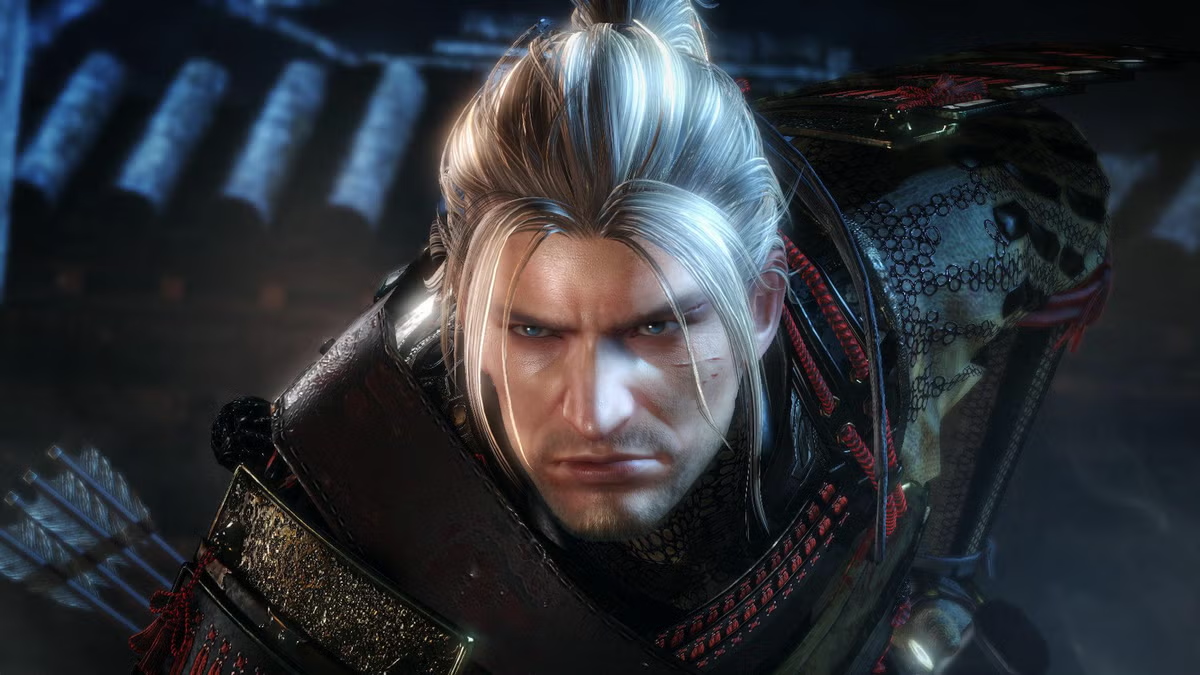
The departure of Tomonobu Itagaki, now president of Valhalla Games, definitively marked the end of the golden age of digital ninja Ryu Hayabusa, condemning his later adventures under the Ninja Gaiden name to poor performances both in sales and popularity. Yet the evolution Team Ninja had been desperately chasing after years of past success has finally arrived. William, a British warrior mysteriously tied to the spirit world, finds himself in a slightly fictionalized early 1600s, caught up in schemes and intrigues along the trade routes of merchant ships transporting Amrita—a mystical mineral that grants power to those who possess it. The moment a villain with a caricatured look and the name “Oda Nobunaga” appears, you already know how things are going to turn out.
And that’s more or less where Nioh’s narrative ambition ends. This new and long-tormented project, born from the joint efforts of Team Ninja and Koei Tecmo, was so highly anticipated that Sony Entertainment decided to handle the distribution of this Japan-flavored exclusive in-house, likely to avoid repeating the infamous mistake of publishing Demon’s Souls only in Japan and not overseas—something they would later regret. And indeed, the similarities with From Software’s series are evident, especially to those who participated in the free alpha and beta tests on PlayStation 4 over the past months. Compared to the very first version, the final release available today on Sony’s flagship console feels far better balanced and more forgiving toward players. Though it still delivers heart-pounding action sequences and encounters with terrifying (and above all, resilient) end-level bosses, it’s clear that player feedback during testing was instrumental in shaping what can now be considered one of the finest Action RPG experiences on the market.
Nioh doesn’t reinvent the genre, but instead mixes elements borrowed from various franchises and turns them into something functional, satisfying, and above all fun—without descending into the kind of frustration that makes you want to throw your controller at the wall. It doesn’t try to weave an interconnected world like the Souls games, opting instead for a mission-based structure where each stage can be revisited multiple times as new side missions of increasing difficulty are unlocked. Alternatively, you can take on the role of a “visitor” spirit, joining another online player in need of help through particularly tough portions of the adventure.
Exploring areas infested with human and demonic foes quickly becomes one of the game’s focal points, where a single misstep or moment of carelessness often means certain death. The theme of death—and of eternal return—acts as a clear nod to Souls, incorporating the ability to return to the spot where you fell to reclaim lost Amrita, the in-game currency earned by defeating enemies and used to upgrade your stats. Alternatively, you may notice crimson graves around you, marking the places where other online players met their end. Touching one allows you to summon their vengeful “spirit” for a duel, and defeating it might reward you with special equipment.
That’s part of Nioh’s beauty: unlike most RPGs where character progression is tied to fixed classes, Team Ninja focused on mechanics that let you freely change weapons and invest skill points in entirely separate trees that can be combined by skilled players. In an instant, a swordsman can hurl shuriken and deadly tools to become a fearsome ninja, then switch to Onmyo magic scrolls for ranged attacks, or rely on a long spear imbued with elemental effects for powerful strikes. This level of flexibility is entirely possible—but mastering the combat system takes hours of play, and changing your fighting style too abruptly at first can easily turn into a nightmare, especially against enemies with fast, unpredictable attack patterns.
Adding even more depth to these layered systems—designed especially to reward skillful players—is a practically endless array of weapons, armor, and accessories. These can be customized at the blacksmith, broken down into materials, or sacrificed for additional Amrita or money. And despite mentioning so many detailed mechanics, I’ve only scratched the surface of a game structure that is deep, engaging, and entirely built around its true centerpiece: the combat system. I never thought I’d find myself praising what many dismiss as a Souls clone, yet Nioh completely changed my mind. You can feel the philosophy of lightning-fast movements inherited from Ninja Gaiden, the stamina management borrowed from Dark Souls, and the blend of stealth and gadget use reminiscent of Tenchu—another series that, incidentally, once passed through From Software’s hands.
But it doesn’t stop there. On top of all that, Nioh introduces brand-new mechanics: three weapon stances, essentially offering three distinct combat styles per weapon type; the ability to modify combos with different moves; passive abilities; and much more. Nioh is an open-heart operation that takes the wisdom of classic action games and perfects it. In this light, it’s easy to forgive the occasional technical hiccup—like the odd collision miscalculation—or a couple of less inspired levels. To make up for those, there’s the ninja mansion stage, with its traps and secret passages, which brings the game back to the kind of inspired level design that defines the best of the genre.
As for the technical side, while it may not boast an art direction as striking as that of Bloodborne, it still manages to deliver several evocative moments. Players can choose between a cinematic mode, where visual detail and resolution are prioritized at the cost of a capped 30fps, or an action mode that locks performance at 60fps while slightly reducing resolution and detail. On PlayStation 4 Pro, the cinematic mode looks even better, but personally, I can only recommend prioritizing fluidity—always the right choice for a game of this kind.
Nioh is a constant surprise, built on the twin pillars of Japanese folklore and refined gameplay. It may not have the same narrative or thematic pull as From Software’s now-classic titles, but its gameplay structure stands among the most sophisticated and rewarding I’ve experienced in the past decade. And yes, I can finally say it: Team Ninja has found its old spark again. Goodbye, Itagaki—and thanks for the fish.