This article was originally published in Italian on GeekGamer.it in 2019.
For years, fans of the Resident Evil saga have loudly demanded a remake of the series’ second chapter, and Capcom has always been well aware of this. The reason wasn’t solely the extreme popularity of the title released on PSOne in the ’90s, but also the excellent public and critical reception garnered by Capcom with the remake of the series’ progenitor, launched as a GameCube exclusive and later arriving on all gaming platforms of the current generation. Precisely around the turn of the millennium, the series was undergoing a delicate process of modernization and rejuvenation of its mechanics, transforming the brand from a true synonym for the “survival horror” genre into a third-person action shooter, following the bland release rhythm of the numbered episodes which gradually drifted further and further from the tense and horrific atmospheres typical of its past, from the era of pre-rendered backgrounds, resource planning, and fixed-camera direction.
This was followed by the experimentation of Resident Evil 7, which aligned itself with the trend inaugurated by hugely popular first-person titles like Outlast and Amnesia, as well as a path of diversifying the brand’s offerings, split between numbered chapters and the “Revelations” spin-off, long considered a midpoint between action and the classic survival horror conception. At that point, Capcom needed to reassure the fans, who were at the time incensed by the Cease & Desist order imposed on the Italian team that announced it was working on a fan-remake of the series’ second chapter: an official Resident Evil 2 remake could only become reality soon after, but it was still necessary to wait for the time to be right.
Now, we are all well aware that Capcom has managed in recent years to avoid the steady qualitative decline typically “made in Japan” felt by many other historic studios (see Konami and Square Enix), but the cost of reliable technical know-how and the economic resources required to develop products competitive in today’s market has inevitably involved the aggressive milking of many legacy brands, often re-released in a summary fashion on current-generation gaming platforms (see the recent Onimusha: Warlords) to make easy money with impunity by exploiting the sense of nostalgia that plagues older gamers. Precisely for this reason, it was still legitimate to expect the company could exploit the same easy-money mechanism for the long-awaited return of Resident Evil 2, a production originally born from the synergy created between personalities from the Japanese creative landscape who are now deceased or engaged with other production houses.
Resident Evil 2 was Shinji Mikami (Shadows of the Damned, The Evil Within), but also Hideki Kamiya (Bayonetta, The Wonderful 101) and Noboru Sugimura, a talented writer now deceased who gave life to the narrative universes of some of the most appreciated Japanese entertainment products of the past two decades. To him we owe not only the characterization of Leon, Claire, and the original story of Resident Evil 2, but also highly acclaimed works like the tokusatsu TV series Kamen Rider Black, the scenario for Haunting Ground and Clock Tower 3, and the first Onimusha trilogy. In a world where these brilliant minds are no longer at Capcom’s service, it was clear to expect that Resident Evil 2 Remake could fail in the thankless task of rekindling the joy of challenging, controller in hand, the post-apocalyptic setting of a bleak, cruel Raccoon City teeming with creatures ready to stand between us and the end credits.
To bring this long-awaited revival operation to completion, in line with the current market trend of exhuming past glories to add arrows dipped in retro fascination and nostalgia to its quiver, Capcom entrusted direction to Kazunori Kadoi and Yasuhiro Ampo, two veterans of the saga with prominent roles in the creation of Resident Evil 5, Resident Evil 6, and the Resident Evil Revelations series—and that alone should say much about the product we want to analyze today.
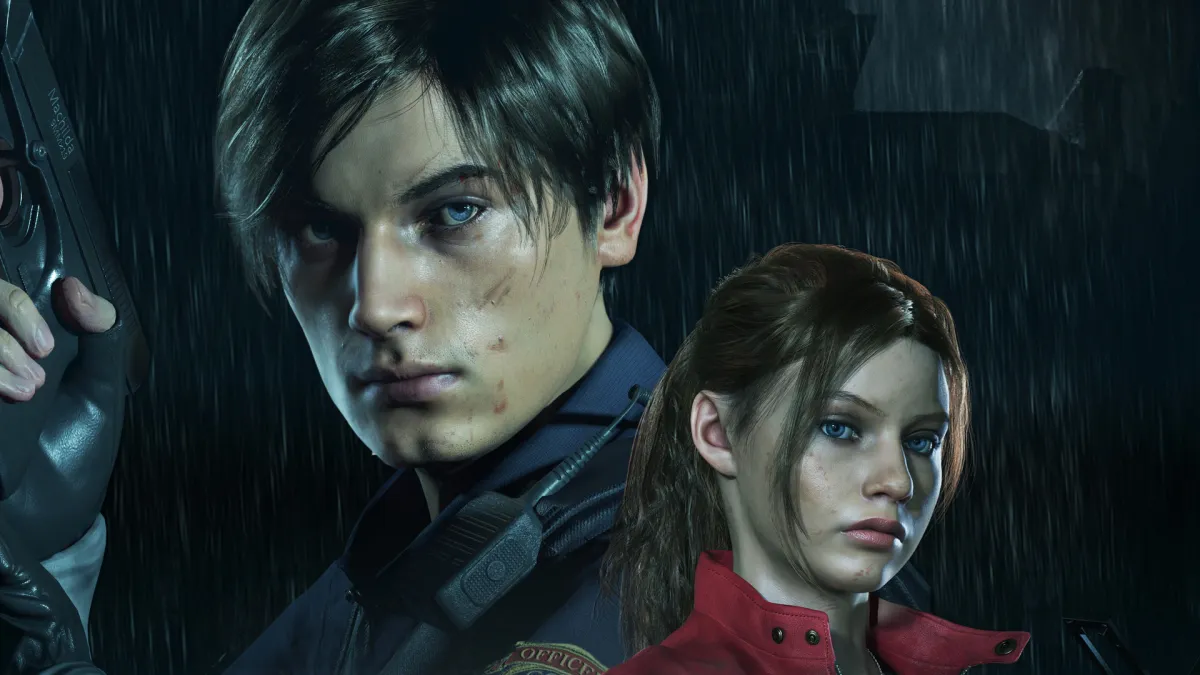
Resident Evil 2 (notably lacking any subtitle to indicate its remake identity) positions itself more as a kind of gentle reboot and a veritable reimagining of the 1998 classic than a straightforward remake of the second chapter, presenting a similar story told with considerable authorial freedom. It is, first and foremost, an excellent action video game where the survival component is nevertheless very present and which does not indulge in the dynamic excesses of the previous numbered iterations of the saga. In the shoes of Leon Kennedy or Claire Redfield, the player can indeed experience two single-player campaigns inspired by the events of the original title, propelled by a particularly brisk narrative pace that leaves little room for lore fetishists and text-file enthusiasts.
The video game envisioned by Capcom remains, in any case, a pure, distilled survival experience, free of the convoluted complications and brain-teasing puzzles typical of ’90s video games, but at the same time marked by some design choices (if you will, even somewhat implausible) that wink at older players. And so it is that in a title devoid of loading screens and where most enemies are capable of chasing the player through tight corridors and claustrophobic rooms, it also admits the existence of keys of the most disparate shapes, menus capable of freezing the ongoing action, and doors that cannot be crossed despite the protagonist of the moment being armed to the teeth and a gunshot could easily ensure escape from a dangerous situation. These are choices that clash with an extremely realistic staging and a deliberately simplified storytelling meant to keep the attention of the most classic consumers of American TV series, anesthetized by easily digestible scripts and enriched by various declensions of the F-word; in any case, if the general public has accepted the ludonarrative compromises of stuff like the Tomb Raider saga reboot, these dissonances can only appear as mere trifles.
There’s little to say regarding the survival horror experience, because mechanically Resident Evil 2 functions exactly as it should: zombies have returned to being slow, clumsy creatures, but extremely tough to put down. Positioned in cramped spaces and often concealed by darkness, they react to gunfire in a dynamic way, deforming with each shot they absorb. While clashes with these (and other) creatures can almost always be avoided, it is only during the challenge sessions against the (few) bosses that the game rewards the virtue of planners and those who have judiciously stocked up on resources, although good skill controller-in-hand is still required (and Capcom rushes to the aid of the less adept with aim-assist mechanisms). Compared to the original title, several enemy variants and explorable environments are missing from the count, but the game doesn’t suffer at all from this omission: as said before, Resident Evil 2 is a survival horror totally in line with the spirit of the original chapter, but it does not represent an exact 1:1 translation. The mere constant presence of an enemy like the enormous Mr. X, originally limited to Claire and Leon’s second scenario, is certainly a significant alteration to the economy of a video game that at the time offered two fundamentally different adventures for the protagonists, whereas in the current remake Scenario A and B present themselves as nearly identical storylines. In this sense, it’s disappointing to note that Capcom didn’t even bother to create a “canonical” ending for the game’s events, concluding everything by barricading itself once again in the ambiguity of the original work. It’s not as if the narrative “continuity” of the series is all that important at the moment, after all.
Precisely because of this dual nature, the remake of Resident Evil 2, unlike the remake of the first chapter, cannot replace the reference work, but can only stand alongside it. With this, we do not mean to claim that the title in question is not valid or lacks intuitions that affirm its own uniqueness, but the remake born on GameCube had the merit of reproposing the original’s mechanics in a modern key, expanding its narrative and dressing it in a graphic and stylistic guise that respected the foundational philosophy in an almost religious manner. Capcom’s latest work is instead a third-person action survival horror with well-balanced and weighed elements that reasons by subtraction, eliminating exploratory phases and elements considered “excessive” to provide players with a gaming experience in step with the times, but fortunately not as brain-dead as many other contemporary productions. Following this reasoning, it’s clear why Capcom heavily reworked the plot and narrative structure of its ’90s classic, omitting elements that shed more light on the lore—text files in the vast majority of cases—in favor of an experience more easily geared towards action.
Precisely because of the extreme fluidity with which the entire experience moves, the title is perfect for speedrunners and lovers of pure survival horror, perhaps at higher difficulty settings, free from any narrative or melodramatic pretensions. The game not only does not hide that it precludes access to certain content until the campaign has been completed at least once with both characters, but also includes alternate scenarios (as in the original work) in which the player is called to move from point A to point B on the enormous map in the shortest possible time, leveraging the experience now matured in the field. This description applies both to the Hunk and Tofu scenarios, already seen in the original game, and to special “what if” modes added free of charge in the period immediately following launch. These bonus components do not enrich the formula in any way except for a handful of enemy variants and a few more arcade mechanics (like the possibility of recovering resources randomly, akin to a roguelike); without a shadow of a doubt, the most interesting scenario is the one configured as a sort of horde mode where you are required to survive barricaded inside a shop in the desperate wait for someone to come to the rescue.
In closing, a few mentions of the elements that season the well-honed gameplay formula of this solidly produced title. Resident Evil 2 was developed using the RE Engine already praised in Resident Evil 7: Biohazard and also returning for Devil May Cry V. The gameplay’s effectiveness is reinforced by fluid action (at 60fps even on consoles) and rapid transitions between the brief cinematic scenes and gameplay phases, in an attempt to always keep the player’s interest high. Resident Evil 2, like the other cited titles for that matter, makes use of photogrammetry, a particular digitization technique that allows for scanning objects and people into three dimensions through dedicated equipment, ensuring a level of realism that simple 3D modeling cannot achieve with the same ease. That said, the aesthetic chosen by Capcom to characterize this product is halfway between the hyper-realism of a photograph and the naive artistic direction of the original work, with faces alive and rich in detail and clothing items with textures finely reproduced by high-resolution textures.
The protagonists’ appearance moves away from the stylized artwork and vibrant original color palettes to embrace a more credible realism, but the quality of the writing has not made an equally significant leap in that direction. It must also be emphasized how the relationship between Claire and Leon, originally defined by their combined struggle to survive the hell of Raccoon City, is here merely sketched out, and not even in the best way: the two meet, separate, flirt like teenagers in the shadow of a helicopter that crashed mere moments earlier just meters from their heads, only to reunite just before the end credits. This substantial modification of their dynamic could disappoint both newcomers and longtime fans of the saga, and frankly I myself found the chemistry that is immediately created between the two, only to culminate in nothing, rather unconvincing. Without dwelling too much on the narrative compartment (evidently not considered particularly important even by Capcom), one could also discuss how the graphic presentation, though extremely convincing, is also characterized by a total lack of interactivity: one of the most glaring examples is the inability to shoot at an enemy pounding against a windowpane until the glass is shattered by its own blows. Furthermore, it pains me to admit, but after breathing the horrific atmospheres of Resident Evil 7: Biohazard (especially paired with VR), which, albeit derivative, worked as they should, making my way through the streets of Raccoon City hearing the brisk footsteps of an enormous individual dressed only in a trench coat didn’t stir particular feelings of dread in me. It’s called survival horror, but rather than inspiring genuine horror in me—felt instead by the audience at the time, also due to the historical moment—Resident Evil 2 merely managed to keep me tense throughout its duration. Dead Space—staying in TPS territory—as horror still works for me today, and even better.
We must be clear: Resident Evil 2 is a fun, well-crafted action title with survival elements that function as they should, but it obviously cannot astonish the audience as the original title did in the ’90s. A simple, straight-to-the-point narrative and an agile, well-executed third-person shooter skeleton are characteristics that define it and explain its sales and critical success, but on the other hand it is also true that anyone expecting a faithful translation of the original title or, even better, a remake along the lines of the first Resident Evil‘s, could remain bitterly disappointed. A soft-reboot best enjoyed alongside the original title, without too many regrets.