Tomoya Asano is currently among the most prominent producers within Square Enix. His ascending trajectory began with the success of the 3D remakes of Final Fantasy III and Final Fantasy IV for the Nintendo DS, culminating in the underrated Final Fantasy: The 4 Heroes of Light, a true apocryphal entry in the franchise.
What is known today as Team Asano owes its fame mainly to titles such as Bravely Default and Octopath Traveler: two original series that, on their own, gave hope to turn-based RPG enthusiasts at Square Enix for a long time, while the company’s most famous series evolved in increasingly action-oriented directions.
While Tokyo RPG Factory, a subsidiary studio of Square Enix, closed its doors despite having produced games like I Am Setsuna with similarly nostalgic and retro scopes and influences, the creative collective born around Tomoya Asano managed to systematically churn out classic-flavored games capable of navigating today’s increasingly competitive market. The main reason? The ability to skillfully mix elements belonging to the turn-based role-playing genre’s past with technologies and sensibilities capable of responding to contemporary needs. In Final Fantasy Resonance, Asano’s name still appears as Executive Producer, but this time the heavy-lifting work is left to younger producers Kei Hirono, Keisuke Nakashima and Harvestella’s director, Hiroto Furuya. Will the legacy of the team be respected?
Final Fantasy Resonance is the first entry in the main series to adopt the HD-2D visual style made famous by the Octopath Traveler series and the recent Dragon Quest remakes.
Resonance loosely adapts the events told in the first season of Final Fantasy Brave Exvius, a gacha-style mobile game active between 2015 and 2024. Although the story, central cast, and much of the art direction have been reused or reinterpreted for the occasion, the mobile title and this new game could not be further apart from a strictly technical and mechanical point of view: just like Octopath Traveler 0, Final Fantasy Resonance presents itself as an old-school, turn-based role-playing game.
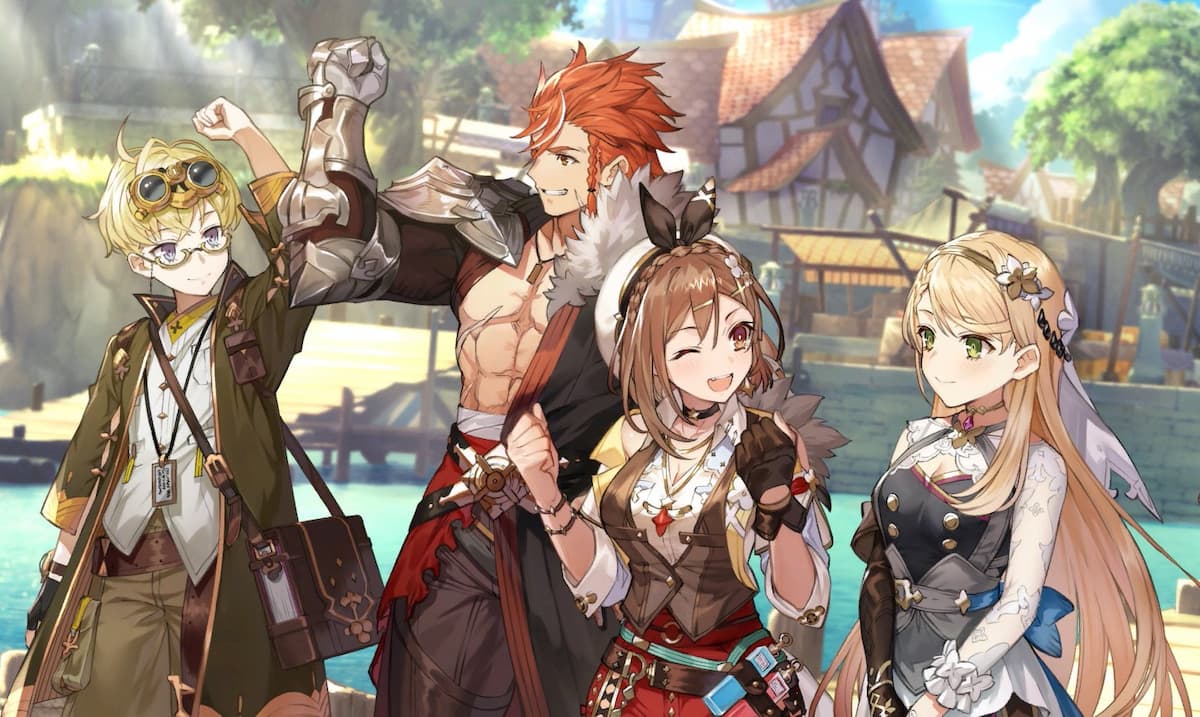
Co-developed by Lancarse (a studio already known for Shin Megami Tensei: Strange Journey and Persona Q2: New Cinema Labyrinth), the game is set in the flourishing world of Lapis. Here, the two protagonists, Rain and Lasswell, swordsmen in the army of the Kingdom of Grandshelt, serve as knights protecting the Earth Crystal.
The story opens following their investigation to discover what is weakening the barrier that normally protects this important national relic. Legend has it that if something were to happen to the six elemental crystals protecting the world, an unspeakable catastrophe would be triggered.
Given the urgency, the two cannot help but look into the matter, and urged on by a mysterious female voice, they rush toward the Earth Temple aboard their airship. Upon reaching the crystal chamber, they encounter an unknown and extremely powerful armored warrior who attacks them without hesitation. During the tragic encounter, the Earth Crystal is destroyed, and shortly thereafter, their castle is set ablaze by invading forces. While fighting to protect the ruler of Grandshelt, the two young men encounter the mysterious armored man once again, this time accompanied by five other warriors. The violence of the resulting clash forces the protagonists to their knees, until the miraculous intervention of a girl saves the day, driving away the invaders thanks to an outburst of inexplicable power.
Exhausted, the two knights can at least rejoice in having saved their sovereign’s life. He entrusts them with a new mission, joined by Fina, the mysterious girl who saved them during the crisis. The objective is simple: ensure that the crystals protected by neighboring kingdoms do not suffer the same fate as the Earth Crystal. A pretext to kick off an adventure aimed at shedding light on the mystery of the armored invaders and the sudden crystal crisis affecting every kingdom in Lapis.
As easily deduced from this introduction, we are once again facing a Square Enix and Team Asano title with a strongly classic footprint, to the point of feeling almost like an archetypical journey.
Given the openly nostalgic nature of the project, it comes as no surprise that the events of Square Enix’s new game hold few surprises for those familiar with the genre’s main narrative tropes. That said, despite an extremely sui generis introduction, once the trio of heroes sets off, events flow smoothly at a brisk pace, balancing healthy self-referential homage with moments of comic relief provided by optional exchanges reminiscent of the skits in the Tales of series.
The narrative strictly follows the tropes and archetypes most in vogue in the reference productions of the 1990s, presenting a fantasy setting that repeatedly pays homage to the earliest chapters of the franchise by reviving high-fantasy characteristics typical of the series’ past, such as the presence of dwarves and elves. Playing Final Fantasy Resonance, it is not uncommon to find situations that cite events and locations from early entries directly or indirectly: during Rain and company’s journey, you encounter ghost trains, decide the fate of an empire by flipping a coin, and contact revolutionary movements using the code word “Wild Rose.” While these passages end up feeling delightfully self-referential, it is precisely the type of fan service that Yukinori Kitajima, writer of this title and the recent Fire Emblem Engage, chose to use to define its identity.
Curiously, the English version of Final Fantasy Resonance also includes literal references to other 1990s RPGs that were not part of Square Enix’s catalog, explicitly quoting Capcom’s Breath of Fire titles or Game Arts’ Lunar: Eternal Blue. There are also homages to the Chrono series, including a chapter titled “Scars of Time,” named after the legendary opening track composed by Yasunori Mitsuda for Chrono Cross.
It would be interesting to clarify whether these references are mere coincidences, intentional homages added by translators in the English script, or deliberate nods honoring the memory of the 1990s Japanese role-playing genre as a whole.
If nothing else, despite embracing the classic premise of an adventure in defense of elemental crystals, the game always manages to present sufficiently varied situations to keep player interest high. Along the way, you find yourself navigating harrowing timed escapes complete with on-screen countdowns, dungeons featuring simple environmental puzzles, urban investigations, and other scenarios that provide a strong incentive to push forward.
I must admit that while I generally found it enjoyable, the narrative component was perhaps what convinced me least about the entire experience. This is likely due to writing that focuses more on keeping the pacing brisk rather than dwelling on the psychology of the protagonists, who remain distinctly characterized, but never truly fleshed out.
As mentioned earlier, the main story inherits the core events of Final Fantasy Brave Exvius, but substantial changes have been made. Certain events were reordered to build a more linear and cohesive narrative, though some modifications may have eroded the characters’ already thin characterization. For instance, in the original script, one of the elemental crystals was deliberately destroyed by a party member to resolve a crisis affecting their loved ones. Naturally, this established a rougher, more human identity with selfish motivations that added real tension to the group. This does not happen in Final Fantasy Resonance, and while the rewrite handles the event coherently and logically for the plot, it is a shame that the nuances in the moral ambiguity of the protagonists were lost.
To compensate, new side events were added to better define the leads, but the situations they face merely double down on traits that were already clearly defined. They do not add much depth, though they do shine a spotlight on their growth and their relationship with society.
However, I must be honest regarding the treatment reserved for one character in particular. The clearest manifestation of writing overly reliant on genre clichés is the characterization of the alluring Fina, the game’s “cover girl” featured across all promotional material.
Her seductive and mature appearance never translates into writing that explores her more intimate or controversial sides, even though she is introduced as a complex character with a multifaceted morality. Two identities coexist within Fina: a young white mage blessed with the gift of summoning Espers, and an ancestral warrior, an Archmage capable only of offensive spells. Their romantic interest in the protagonist is specular, but the way they express it sits at opposite poles. While it is possible to follow Fina’s superficial evolution, the Archmage’s attraction to Rain is essentially declared without ever being justified by events.
Throughout the adventure, with rare exceptions, the two coexist in the party without displaying behaviors or feelings that would capitalize on Fina’s core dynamic: one the reflection of the other, rivals in love, yet essentially lacking any conflict stemming from each other’s existence.
Their dualism is relegated to a handful of scenes that feel useful for setting up endgame events rather than genuinely unpacking a symbiotic relationship (one that saw far more virtuous examples in the genre’s past, such as the immortal dynamic between Elena and Millenia in Grandia II). Personally, I find it a shame to see an HD-2D title act so restrained after the dark and often dramatic excesses seen in Octopath Traveler 0, though it is true that bearing the Final Fantasy name comes with expectations regarding content tone. This holds true despite both games inexplicably sharing the same PEGI 12 rating: I can assure you that the level of grimness is not remotely comparable.
If nothing else, the retro atmosphere lives up to the expectations of titles published during the golden age of JRPGs. The exploration model also adheres to the sense of freedom felt back then: right from the opening hours, players can explore a fully-realized world map filled with secrets, detours, hidden treasure chests, collectibles, and combat-focused side activities. It is not uncommon to venture down a path unmarked by quest indicators and find yourself rewarded with new summons or equipment with unusual effects.
As expected nowadays, the title allows for smooth play thanks to modern quality-of-life options, such as instant fast travel, accelerated battle animations, clear navigational markers, auto-saves on area transitions, and the ability to adjust random encounter rates using passive skills or specific items.
Final Fantasy Resonance adapts most of the storyline from Final Fantasy Brave Exvius, rewriting certain passages to deliver a more cohesive narrative aligned with the franchise’s contemporary identity. In this regard, the story reaches a satisfying conclusion coinciding with the finale of the mobile game’s first season, which originally left things open for future updates.
Naturally, this required cutting seasonal side events and several playable characters from the mobile version; the original gacha structure relied on collecting heroes from across the franchise. The charm of those crossovers, originally tied to microtransaction banners and pulls, has been converted into the Vision System.
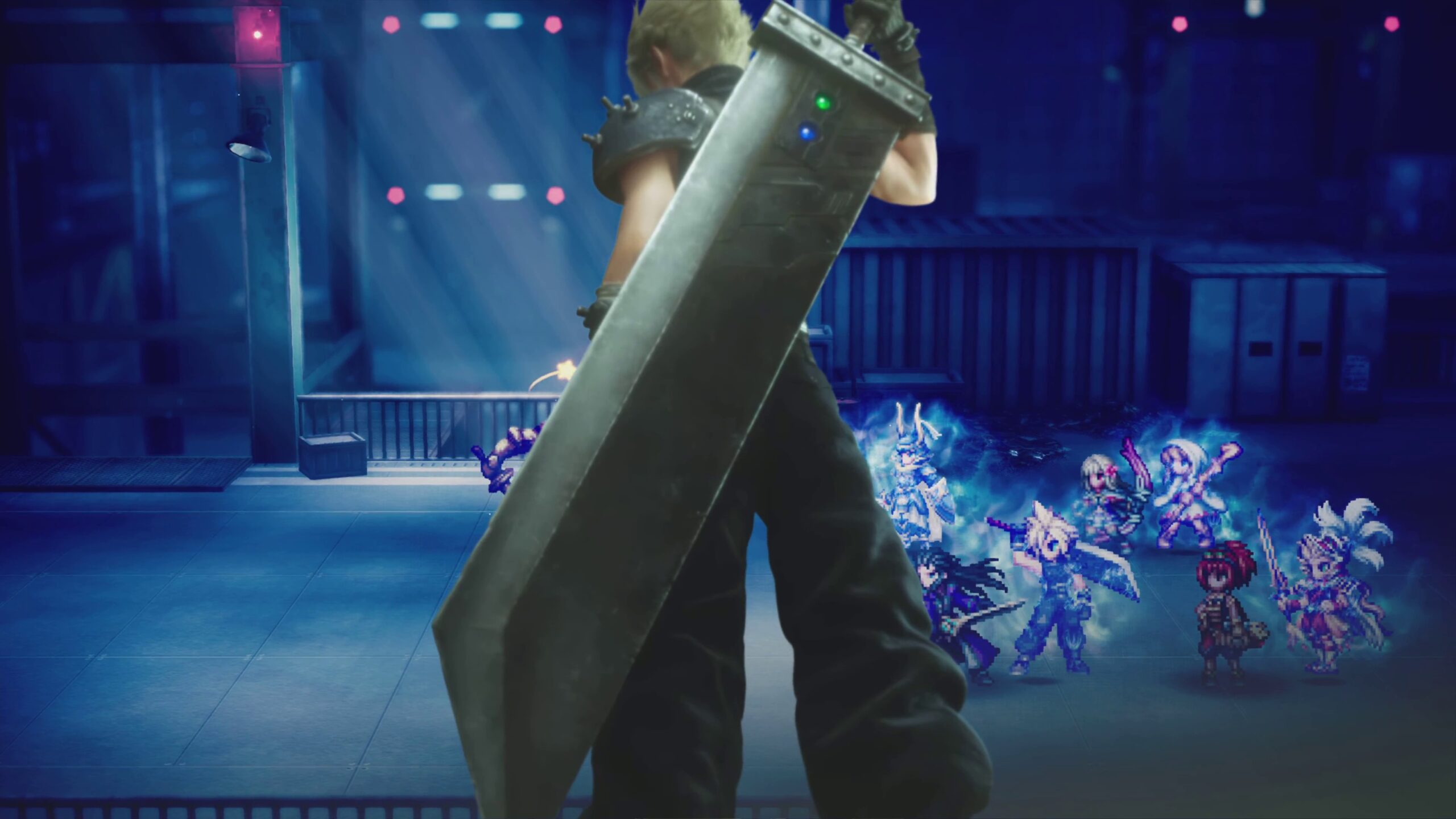
During their journey, Rain and Lasswell can gather crystals containing the essence of heroes and heroines from other worlds. Channeling them unleashes the traits and power of iconic Final Fantasy characters, alongside familiar faces from the mobile game. The recruitment sequences for new Visions test player alignment by asking questions to evaluate how closely your choices match those of the hero. These answers do not yield gameplay consequences, but the ritual establishes a thematic connection between the player’s values and the heroes of the series’ pantheon.
These brief vignettes summarize each recruitable hero’s journey, showing footage from their original games. Interestingly, scenes from Final Fantasy X utilize the HD Remaster footage featuring Tidus and Yuna’s updated character models, while classic entries use original NES and SNES footage, skipping the Pixel Remasters entirely.
The Vision System functions similarly to a granular Job System: each recruitable vision adds skills to the equipping character’s combat repertoire, which can be upgraded up to three times by collecting rare crystals.
Active skills are undeniably useful, creating strong synergies with the unique traits of the main cast. However, the system’s true depth lies in increasing affinity between visions and characters.
At the end of every random battle, alongside Gil and experience points, players earn Mastery Points shared directly among equipped visions. Raising Mastery Levels (up to a cap of level 9) allows characters to permanently inherit unique traits, boosting stats and unlocking passive abilities that can be mixed and matched.
This unlocks engaging tactical possibilities for turn-based combat fans: for instance, using Lasswell, a swordsman proficient in ice techniques, you can inherit the ability to take two actions per turn from Squall’s vision (Final Fantasy VIII), while equipping Clive’s vision (Final Fantasy XVI) grants broad fire attacks.
Together, these mechanics give access to immense freedom in party customization, even though each of the eight main heroes retains exclusive mechanics and elemental affinities. Jake, for example, uses a luck-based move set optimized by landing critical hits or flipping a coin. Lid, the inventor, summons a mechanical chocobo whose abilities are upgraded by completing specific monster-hunting side quests across Lapis. Or again, Fina, the party’s healer, can support the team while summoning classic Espers that unleash scaling elemental attacks after three turns.
Despite these setups, characters and visions are structured not through a traditional Job System, but through Paradigm-style roles reminiscent of Final Fantasy XIII. These designations remain purely advisory, as players can freely customize their group through the Vision System.
The character growth, tactical planning, and build customization are complex and intriguing. While random encounter mechanics echo recent Octopath Traveler entries in presentation, their underlying logic aligns closer to modern Final Fantasy design.
In combat, enemies display two gauges showing health and defense shields. Exploiting elemental weaknesses breaks defense meters quickly, which remains a top priority.
Knocking down an enemy rewards the character landing the decisive hit with an extra turn, but breaking all enemies simultaneously turns the tide dramatically. Doing so grants the entire party an extra action, culminating in Resonance attacks. During these windows, equipped visions unleash devastating techniques featuring high-octane CGI animations derived from Final Fantasy Brave Exvius’ Limit Bursts (which remain voiced exclusively in Japanese).
Executing a Resonance requires careful consideration of attack types to exploit weaknesses or set up future turns: Cloud Strife from Final Fantasy VII unleashes a physical lightning strike, while other visions, like commander Charlotte, grant vital defensive buffs to the entire party.
Final Fantasy Resonance is a deeply strategic game. Its design forces even die-hard grinding apologists to engage directly with core combat mechanics rather than relying on raw level advantages.
As you progress, boss battles become intricate tactical puzzles solved through deliberate choices and extra turns. Certain encounters require alternating between physical and magical techniques, while others demand cycling through elements. Every offensive skill clearly indicates its effectiveness in terms of damage output and shield depletion.
Some enemies require breaking defense meters before taking any damage, making it essential to time attacks so all targets drop on the same turn to trigger Resonance combos. Consequently, demanding encounters (especially on higher difficulties) can last dozens of minutes.
This abundance of enemy health points represents the most critical flaw in the game’s overall balance. The Vision System grants access to powerful offensive abilities early on, leading developers to tune boss difficulty by inflating HP pools. This often turns enemies into “HP sponges” reminiscent of mobile or live-service titles: a connection that is no coincidence, given the game’s origins. I must admit this aspect disappointed me, given Team Asano’s involvement.
While the game notes that playing on the highest difficulty rewards additional MRP points (used for upgrading visions), I strongly recommend choosing the intermediate difficulty. It offers a far better balanced experience that avoids artificial length inflations, particularly during post-game activities where enemies boast millions of HP.
If you choose to tackle high-level challenges, side quests clearly indicate optimal spots to farm high-yield targets, usually Cactuars (which mirror the function of Metal Slimes in Dragon Quest remakes).
Visually, Final Fantasy Resonance utilizes the popular HD-2D aesthetic from Octopath Traveler, paired with high-resolution environmental textures that move away from classic pixel-art structures.
In some respects, the visuals mirror recent Dragon Quest remakes. However, camera direction and dynamic perspectives during exploration feel closer to Star Ocean The Second Story R, bringing the camera close to two-dimensional character sprites during real-time cutscenes, and adding a drawn portrait next to dialogues. Post-processing effects add depth and distinct visual flair to environments: while personally I found the constant visual noise a bit bothersome, it perfectly nails the aesthetic of the previous HD-2D titles.
The 3D environments are sufficiently characterized and never anonymous, and although I appreciated the work done in most cases, I admit I’m not a big fan of how the pixel art of characters and monsters — many of which reuse some of their sprites directly from classic titles, with noticeable style differences — gets blurred in some scenes and then comes back into focus in others. It’s probably a consequence of the constant perspective shifts demanded by the game’s relentless direction, but I personally did not like it.
It’s also worth clarifying a particular aspect: Final Fantasy Resonance was pitched as a theoretical look at where the series might have gone had Square Enix not transitioned to 3D. Monsters and summon pixel art rely heavily on puppet-animation distortions for movement. While this technique does not strictly preserve classic frame-by-frame pixel art animation techniques, the visual results are most of the time convincing.
The universe crafted by Square Enix and Lancarse remains thoroughly enjoyable. Its merit lies in bridging traditional pixel art with modern sensibilities tailored for dynamic pacing and dramatic flair. Cinematic sequences leverage sweeping camera motions and particle effects to emphasize key moments. The soundtrack by Noriyasu Agematsu (creator of the animation project Princession Orchestra) is outstanding, complemented by solid dual-audio voice work in English and Japanese, though I personally preferred the original Japanese audio track.
Spanning over 60 hours, Final Fantasy Resonance finds its best expression in its combat system, turning weakness management, extra turns, and Resonance attacks into a rewarding tactical loop. The Vision System elevates party customization beyond simple nostalgia. Rewarding exploration and refined HD-2D art direction complete a well-rounded package. While archetypical character writing and inflated boss health pools on higher difficulties prevent it from reaching absolute greatness, it remains a robust JRPG. It proves that returning to franchise roots can yield something meaningful rather than relying on simple nostalgia.