This article was originally published in Italian on TheGamesMachine.it
The return of a classic like Snake Eater can only be celebrated as a perfect opportunity to rediscover one of the finest stealth-adventure games ever developed. Today, however, the occasion feels even more enticing thanks to the collaboration between Konami’s internal studios and the Chinese team Virtuos, already known for their work on the well-received Final Fantasy X/X-2 Remaster and, more recently, The Elder Scrolls IV: Oblivion Remastered.
Metal Gear Solid Delta: Snake Eater is a true Unreal Engine 5 remake of the immortal 128-bit console title directed by Hideo Kojima back in 2004. And while the absence of its original creator at the helm initially worried longtime fans, our hands-on experience suggests the project holds up. Snake is back—and as his own story teaches, sometimes you need to break free from your uncomfortable parents in order to grow and live again.
If for the return of Silent Hill Konami went to great lengths to bring back the key creative figures behind the second installment’s remake, Metal Gear Solid 3 Delta: Snake Eater instead seems born from the company’s desire to make the Metal Gear brand relevant again, now that Kojima is busy with other projects. We’re far removed from the days of the infamous #FuckKonami backlash and the fallout from Kojima’s departure, such as the intensely negative reception to Metal Gear Survive. Konami is currently engaged in a broader reevaluation of its historic IPs, even going so far as to revive one of its most successful 1990s brands, Tokimeki Memorial, despite lacking the original creative team. In this sense, Snake Eater is the perfect chapter to rebuild the brand’s legacy upon: it’s the entry set at the very beginning of the sprawling Metal Gear timeline (yes, even before the 2D installments) and casts players as a hero both skilled and naïve.
Naked Snake’s journey is a classic, tortuous hero’s path, dotted with deuteragonists who are crucial to the intricate political-fantasy universe the series would span from the 1970s to the late 2010s. Though it was the first PlayStation installment fondly remembered by players now well past their 30s, it makes perfect sense that Konami chose to take back the reins of the franchise by starting here, where it all began.
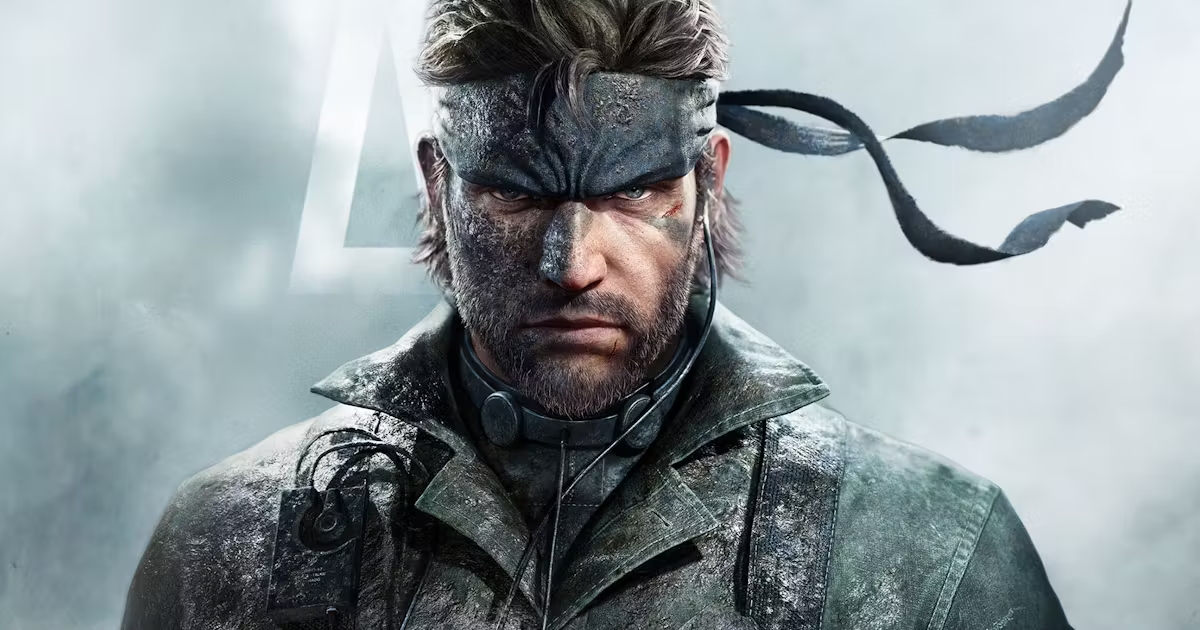
Of course, seeing a major character like Snake return on modern platforms carries far more weight than resurrecting something like Getsu Fūma Den. Following up the simple HD ports of the Metal Gear Solid: Master Collection with a properly built remake was too good an opportunity to waste. Years ago, fans buzzed over pachinko machine cutscenes that reimagined Snake Eater’s most iconic story beats with hyper-realistic detail. If you were impressed by the graphical fidelity of those sequences, know that the work done by Konami Digital Entertainment and Virtuos comes strikingly close.
That said, Metal Gear Solid Delta: Snake Eater doesn’t just include a mechanically reworked version of the game; it also allows players to re-experience the exact same adventure from 21 years ago, but with a fresh graphical coat—though streamlined menus and certain additions are along for the ride. Features from the 2012 3DS release return, like crouch-walking, alongside brand-new mechanics such as a dedicated stalk button. The two gameplay modes allow players either to approach the game as Kojima originally designed it—with an overhead camera and controls faithful to the PS2 era—or to enjoy a modernized version that falls somewhere between 2005’s Subsistence (which overhauled the camera and cinematic direction) and the most recent series entries. The two approaches are even reflected in the game’s aesthetic, with different soundtracks (classic and rearranged), and menus that transform depending on the choice. Chapeau!
Still, for those wanting the most authentic Kojima-era experience, our recommendation after finishing both versions is to stick with the Master Collection. At times, Delta’s production feels constrained by its extreme reverence for the original creators, whose names appear in the credits before those of the remake’s own developers. This limitation extends to the decision to preserve the original voice acting (including the Japanese track), animations, and direction of the lengthy, cinematic cutscenes. While realistic in terms of materials and visual detail, these sequences are ultimately bound by character models that, despite meticulous care, must still adhere to the facial design and proportions of 21-year-old polygons.
Even so, the results are frankly remarkable, especially in an era where most studios rely on state-of-the-art facial scans and motion capture. Kojima himself has long since moved on to photogrammetry and live actors for his latest projects. By contrast, Metal Gear Solid 3 Delta: Snake Eater embraces everything salvageable from the stellar 2004 original and modernizes it in the best way possible. The dreaded uncanny valley is avoided, because the characters’ faces still clearly belong to stylized, polygonal entities.
The true star of this overhaul is the lush Russian jungle where most of the story unfolds. It’s well known that earlier Metal Gear entries were confined to indoor settings because natural environments were too complex to render convincingly at the time—and indeed, the original Snake Eater often struggled to disguise its blocky arenas as wilderness. In light of that, it’s fair to say that Delta finally delivers on what the 2004 game aspired to achieve. Naked Snake’s adventure now boasts credible, finely detailed outdoor environments that shine thanks to both careful 3D work and top-tier original level design. The Soviet jungle, in particular, is spectacular: dense, detailed, and expansive enough to erase the old feeling of moving between small, interconnected maps. Vegetation reacts to enemies and wildlife, while dynamic lighting filters naturally through trees and bushes, creating an incredibly immersive experience. Add in a full day/night cycle, changing weather that affects visibility, and uniforms that realistically pick up mud and foliage, and you get an environment that finally feels alive.
For this reason, while the game was originally designed for an overhead perspective, the modern mode is the one that truly immerses players in a world no longer shackled by graphical compromise. And though readability is now aided by a compass (a nod to the MSX Metal Gear games), it’s hard not to feel that the classic mode exists mainly for completeness and reverence. In practice, the modern perspective feels far more rewarding, letting players crawl through mud, survive quicksand, and endure mountain skirmishes near Groznyj Grad.
In third-person view, the controls have been updated to resemble Metal Gear Solid V, including the ability to move while aiming certain firearms. This significantly alters the balance of some boss fights—for instance, the battle with The Pain becomes much easier when fought while wading in water. To offset this, however, the game includes different enemy AI routines depending on the chosen mode. Effectively, Delta contains two distinct versions of Snake Eater. Not bad, especially given how replayable the game already was, with extra modes, collectibles like the Secret Theater parody tapes, hidden frogs and ducks scattered across levels, and difficulty challenges tied to codename ranks, extra weapons, uniforms, and face paints.
Some moments cut from previous remasters of MGS3 have even been restored here for completeness (we won’t spoil which ones). Our PC review build, provided by the developer, proved somewhat unstable, with frequent crashes across different setups. It’s also worth remembering that this is the first Metal Gear Solid built in Unreal Engine 5, which is far from as lean and responsive as the much-loved Fox Engine. Still, it’s reasonable to expect the issues we encountered (alongside some visual glitches like colored texture artifacts) to be patched at launch. The game supports full mouse and keyboard input, but of course we recommend a controller. And for those without cutting-edge PCs, Delta supports both FSR and DLSS upscaling, making it highly scalable and enjoyable across a range of hardware. Multiplayer, not yet available during our testing, will launch a few months down the line.
Revisiting Snake Eater in this steroid-fueled, smoother, modernized edition with updated controls is undeniably an offer few could refuse. We would have liked to see a little more boldness—sometimes betrayal can serve a greater good—but it’s clear that Delta is meant as a cautious first step toward a new future for the series. We remain curious to see how Konami will expand on this direction, whether with a second volume of the Master Collection, more remakes, or even brand-new entries. A reverential tribute—perhaps excessively so—but ultimately essential for fans.
Metal Gear Solid Δ: Snake Eater is a faithful, gorgeous remake of Kojima’s 2004 classic, rebuilt in Unreal Engine 5 with modern controls, dynamic environments, and stunning jungle detail. It offers both classic and modern modes, expanded mechanics, and plenty of fan-service touches, though its reverence for the original means little bold innovation. Preserving voice acting and cutscene direction keeps authenticity but also highlights the game’s 20-year-old foundations. Some technical issues aside, this is a respectful, visually impressive return—essential for fans, but perhaps too safe to fully redefine the series.