This article was originally published in Italian on Games969.com in 2014
A few weeks after the European launch of Fantasy Life by Level-5, Rune Factory 4 arrives on the European market—albeit only in digital format. Developed by the now-defunct studio Neverland, this title marks the swan song of the creators of Lufia. But can it hold its own against the Nintendo-published Fantasy Life, released on the same console not long ago?
The verdict comes quickly: Rune Factory 4 offers a well-tested gameplay formula, drawing from both the previous entries in the series and the Harvest Moon franchise, another iconic name that won over millions of fans worldwide during the SNES and 16-bit era. Much like Fantasy Life, Rune Factory invites players to quite literally cultivate a life of their own in a fantasy setting—where charming maidens and dashing swordsmen meet the managerial mechanics typical of Harvest Moon.
The story kicks off with an attack on the protagonist (who can be male or female, depending on the player’s choice), who falls from a flying ship and is taken in by the close-knit community of Selphia. Stricken by a rather convenient bout of amnesia, the player is left to shape their character’s personality and steer the course of the adventure. Along the way, they’ll meet a lively cast of characters with whom they can form friendships or romantic relationships—and even govern an entire kingdom through royal orders and… farming.
Unsurprisingly, much of the gameplay hinges on elements borrowed from Natsume’s legendary series, where tending crops and livestock is paired with a crafting system that’s as accessible as it is deep. This loop offers satisfying complexity without ever becoming overwhelming. At first, players will rely on the limited wares of Selphia’s modest shops, but soon they’ll be forging their own gear using materials gathered while exploring nearby areas and far-off lands accessible by airship. What truly sets the game apart is the smooth and streamlined gameplay sessions, which avoid the narrative bloat of Fantasy Life and maintain a brisk, engaging pace throughout.
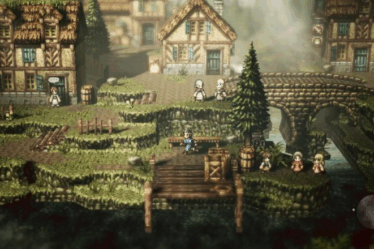
Progression in Rune Factory is more about time than skill, but Neverland softens this with design choices that ensure even short play sessions feel meaningful—perfect for players who can’t sink hours into the game every day. Running at a steady 60 fps, the game delivers silky-smooth action on the 3DS’s top screen, elevating its simple but effective hack-and-slash mechanics during dungeon and forest exploration. The graphics lean into a retro aesthetic, with minimalist polygonal models, pre-rendered backgrounds, and a bird’s-eye view, but the presentation remains charming and functional.
Following in the footsteps of other action-minded J-RPGs, Rune Factory 4 features a combat system where weapon variety and equipment quality make a real difference. You can dive into a mysterious cave relying purely on your own fighting skills, or take a more strategic approach—scouring the area for resources to craft gear suited to the task. If you’re feeling uncertain, you can even recruit townspeople to join you—provided your relationship with them is strong enough. Alternatively, you can tame monsters found in the surrounding fields and forests and bring them along as companions.
There’s no shortage of things to do beyond the main story, and the game’s strength lies in how it balances its many gameplay systems without making any one path feel lesser than another. Not in the mood for battle? You can simply follow the village calendar, participate in festivals, and focus on building relationships with the townsfolk—each with their own personalities, tastes, and ambitions. Should a bond grow strong enough, marriage with the protagonist becomes an option. Prefer to skip plant-tending to prioritize story quests? No problem—train a loyal monster to take care of the crops for you. Need to travel quickly across the kingdom? Ride that same monster to give your adventurer’s weary legs a break.
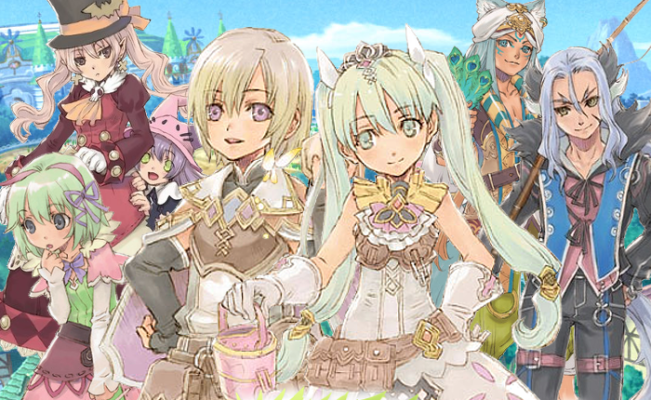
Few Nintendo 3DS titles manage to accommodate so many different playstyles, and Rune Factory 4 does it exceptionally well—helped by a charming manga-inspired aesthetic and a solid artistic direction. The soundtrack and voice acting (partially voiced and English-only) help bring Selphia’s bustling streets to life with catchy tunes and the usual character barks. NPCs move around the town according to an internal clock, interacting with one another in consistent ways: shopkeepers open their stores in the morning, take breaks, chat with customers; shy residents fish quietly by the pond, and so on. It’s this level of attention to detail that really impressed us—something we’d love to see more of in other J-RPGs.
Rune Factory 4 is a complete package. Unlike many high-profile titles that promise the same breadth of content, it truly delivers—both in quantity and quality. It’s a labor of love, clearly built with a deep understanding of what players want.