Naoki Hisaya (writer of Crystar) returns as story supervisor for Crymelight, just like Crymachina. This implies deep, dramatic themes will return (tea parties included!). Alice in Wonderland has been adapted many times—was there a specific element of Lewis Carroll’s classic that made you choose this setting for the new chapter?
I believe Alice in Wonderland is one of those stories that has continued to be loved by people around the world across generations.
I was personally drawn to Alice’s story from a young age. Even as an adult, I’ve continued to be fascinated by new interpretations of the world of Alice, such as Tim Burton’s Alice in Wonderland.
Alice herself is an incredibly pure and innocent girl, but at the same time, she is someone who finds herself alone in a world that she cannot understand. I felt that this made her a very natural fit for the kind of stories we have explored under the “CRY” name—stories about girls confronting pain and the unreasonable hardships of the world around them.
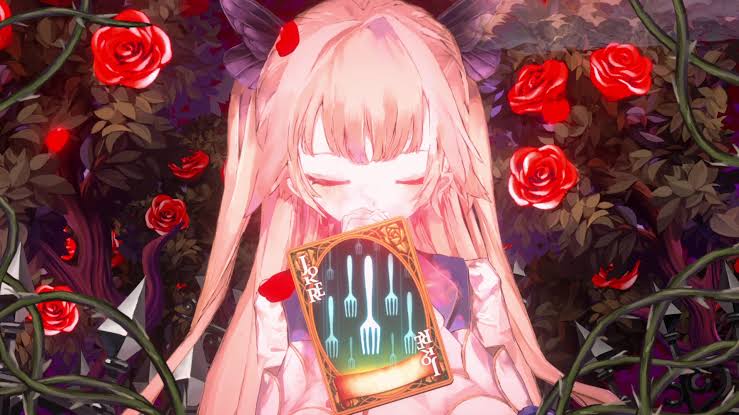
In CRYMELIGHT, a girl who has lost her memories is given the name Alice, and in the afterlife known as Wonderland, she must confront both her own sins and the sins of others.
We wanted to combine two key elements from Lewis Carroll’s original Alice in Wonderland: its absurd, strange, and somewhat frightening sense of fantasy, and the purity of Alice herself.
By bringing those elements together with the “CRY” themes of tears and sin, we felt we could create a version of Wonderland that is uniquely suited to CRYMELIGHT.