This article was originally published in Italian on TheGamesMachine.it.
Reki Kawahara’s Sword Art Online light novel series captured a global audience long ago. Between anime adaptations for both TV and film, and various loose video game tie-ins, Bandai Namco’s bet to turn the property into a cultural phenomenon has clearly paid off with a highly diverse player base. With that in mind, it is no surprise that after tentative past attempts like Fatal Bullet, the franchise’s gaming formula was in desperate need of a shot in the arm.
Enter Echoes of Aincrad, which offers an atypical setup for an SAO title: it fully immerses players in the setting of the anime’s first season—the floating castle of Aincrad—while putting them in the shoes of a completely original protagonist. The game draws inspiration from the recent Sword Art Online Progressive movie duology, which retold the series’ origins with fresh details and a deeper focus on its core duo, Kirito and Asuna. The twist here is that while the two lovebirds still show up, they are relegated to mere cameos. Instead, the narrative centers on the struggles and tribulations of a fresh cast of characters. Will they survive the most infamous and lethal VRMMO in history?
Developed by Game Studio Inc. (the team behind the disappointing Infinity Strash: Dragon Quest The Adventure of Dai), Echoes of Aincrad leans heavily on the charm of its setting and a commitment to absolute fidelity as its main selling points.
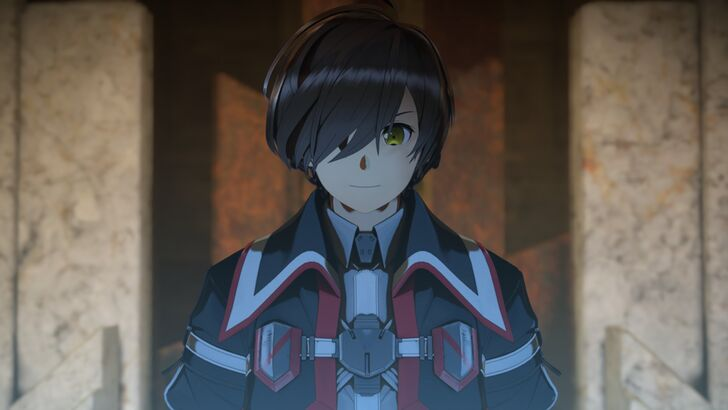
You play as a beta tester for the titular VRMMORPG, thrust into the same awkward position Kirito faced at the start of the original story. Once the real, deadly game begins, surviving becomes a matter of relying on Iori and the companions you meet along the way. Here, the “advantage” of being a beta tester quickly turns into a liability, making you an easy target for other players’ hostility. After all, dying in the virtual wilds of Aincrad means dying in the real world—with a post-game (or pre-order bonus) permadeath mode adding extra mechanical stakes.
That said, the Aincrad narrative ultimately serves as a glorified prologue for what is to come in already-announced DLCs or highly predictable sequels.
While the game revisits themes already thoroughly explored in the source material, and follows a ragtag group embarking on a mysterious quest to escape digital oblivion, the real draw lies in how beautifully Aincrad and its lore are rendered, pulling heavily from both the novels and the Progressive films. As the promotional campaign made clear, the game only covers the first two floors of Aincrad—a world that technically features one hundred. However, this shouldn’t completely deter fans hungry for new content; the tone and narrative pacing hold interest right up until the final stretch, where a sudden, jarring cliffhanger leaves a bitter aftertaste. But then again, every story needs its beginning.
Echoes of Aincrad is clearly tailored to established fans, but it initially shows promise for broader action RPG enthusiasts too. The reasons are manifold, but the most immediate hook is its premium presentation. The detailed environments and overall visual fidelity suggest surprisingly high production values for a licensed title. In fact, during the opening hours, were it not for the unmistakable SAO aesthetic and narrative tropes, you could easily forget you are playing an anime tie-in.
This illusion is bolstered by a blatant mechanical reverence for FromSoftware’s Souls series: safe zones that act exactly like bonfires, a stamina bar governing combat, a heavy reliance on parry mechanics, and a flask-based healing system replenished at rest points. While much of this technically aligns with how the fictional SAO game was described in the original books, the hands-on inspiration feels instantly familiar. It doesn’t hurt the experience; if anything, it makes the game feel quite ambitious.
The problem is that this underlying framework—where physical attack power scales with weapon stats and enemies respawn every time you catch your breath at a safe zone—clashes heavily with the actual core gameplay loop. Echoes of Aincrad is actually a highly linear, story-driven, mission-based action RPG that offers very little freedom outside the main narrative and a handful of side tasks. You can’t even talk to random NPCs in the beautifully detailed towns. When you aren’t guiding a main character through designated areas choked by invisible walls, you are locked inside identical, procedurally generated labyrinths. The formula rarely deviates: explore a set zone, rest at a bonfire, tackle the inevitable boss fight.
Even with minor shake-ups like mid-bosses or barrier gates that require clearing tougher enemies, the loop feels repetitive just a few hours in, leaving almost no room for player agency. This rigidity actively harms the exploration, which is arguably the game’s biggest strength. The first and second floors of Aincrad are beautifully brought to life with unprecedented polygon detail—enough to make the PS5 sweat if you run it in Quality mode.
The sheer scale of these zones is visually spectacular, elevated by excellent art direction. The topography—packed with steep paths, verticality, and hidden underground tunnels—makes tracking down a specific chest a rewarding journey in its own right. The only real disappointment here is the complete lack of any simulated MMO elements. The world exists solely for the main cast; you won’t see other players running around or asking for help to inject some life into Aincrad’s gorgeous but otherwise sterile landscapes.
Given the high-quality level design, it is frustrating that the underlying missions constantly bottleneck your progress, forcing you into arbitrarily locked zones. And while lighting a safe zone populates your mini-map with points of interest—like treasure chests or relics that unlock side quests back in town—combat remains your primary tool for progression. Here, the Souls comparisons give way to a much more modest, though not entirely superficial, system.
Players can choose from six weapon types, each with its own distinct moveset. While a basic early-game axe animations look identical to a late-game legendary variant, the real differentiation happens under the hood via raw stats. By cracking open chests and slaying enemies, you gather crafting recipes to forge gear of higher tiers and rarities. In classic looter fashion, duplicate drops can be sacrificed to level up your active weapons or roll up to four passive perks. Combined with character stats that increase with level-ups—and can be reset at any time for a nominal fee of in-game currency—the game offers a decent amount of build customization. It doesn’t reinvent the wheel, but it gets the job done.
Ultimately, despite some solid concepts, the combat rarely satisfies. Movement feels stiff whether you’re wielding a nimble rapier or charging a heavy axe strike. Your attacks, along with your party members’ slashes, lack impact and tangible feedback, often making it feel like you’re swinging at inert character models.
The lock-on feature works well enough until you’re swarmed. During chaotic skirmishes, the targeting system aggressively resists quick switching to help you pivot from a freshly killed beast to the next threat. Instead, you’re forced to manually wrestle the camera to bring the target into view—a clunky, unnatural process that kills the flow of combat. You do get a dodge roll with crucial invincibility frames (i-frames) to escape screen-clearing boss attacks, but even here, the tight timing feels off due to sluggish animation data. Landing a perfectly timed parry triggers a follow-up attack from your partner for extra damage, which will make Soulslike veterans feel somewhat at home. Just don’t expect it to feel as definitive as Lies of P; extra damage doesn’t turn this into a Sekiro-style parry dance.
The enemy roster draws heavily from the novels, but once you’ve fought the standard wolves, giant insects, and generic fantasy kobolds, the introduction of carnivorous plants, golems, and basic colour swaps does little to sustain interest. Mechanically, the lineup is competent enough; every monster has its own moveset and demands specific tactics to take down efficiently. The problem is that the game’s 30-to-40-hour runtime stretches this limited pool far too thin.
And that’s not even counting the post-game, which devolves into mindless grinding against those very same enemies—turned into literal HP sponges. Granted, a roguelite-style upgrade system arrives to offer some endgame relief, but the road to the secret superboss is a grueling slog of repetition that will alienate all but the most dedicated players.
Even with party assists, character-specific skills, and a choice of three weapon-specific special techniques (out of about ten unlockable per type), an overwhelming sense of déjà vu sets in early on. This repetition bleeds into the side quests and endgame content, which lazily recycle the exact same monster archetypes dozens of hours later with only minor cosmetic alterations. Equally disappointing is the aggressive enemy level-scaling, which completely robs you of the satisfying “power fantasy” progression core to actual MMOs. Consequently, even the flashy cinematic animations that crown a major boss defeat lose their luster after the tenth repetition.
Echoes of Aincrad shines brightest when celebrating the aesthetic charm of the Sword Art Online universe, recreating its world with a level of care and fidelity rarely seen in licensed tie-ins. However, it struggles to turn those solid foundations into a compelling gameplay experience. The rigid mission structure, limited enemy variety, and an ambitious but ultimately unpolished combat system bog down an adventure that desperately needed bolder design choices. It remains an easy recommendation for fans of Reki Kawahara’s work, purely for how well it captures the feeling of standing inside the infamous floating castle. For everyone else, it is a decent action RPG anchored by striking art direction, but one that fails to make the leap required to stand alongside the finest anime adaptations on the market.